
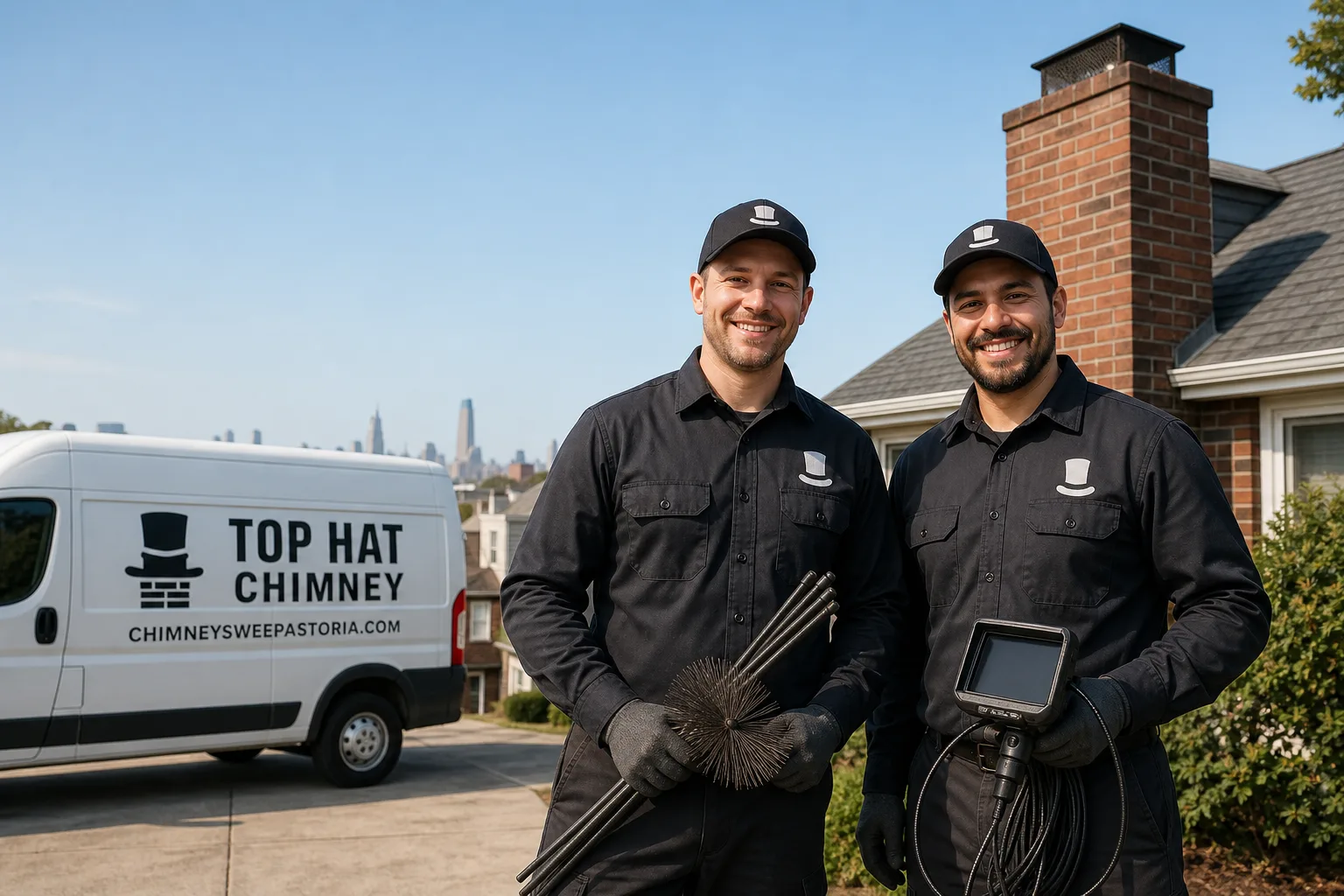
Level 1 sweep and inspection to the NFPA 211 annual standard - flue, crown, cap, and flashing checked and photographed
Chimney sweep logs do not sweep chimneys. They loosen some creosote - which then falls where a brush and vacuum still have to collect it.
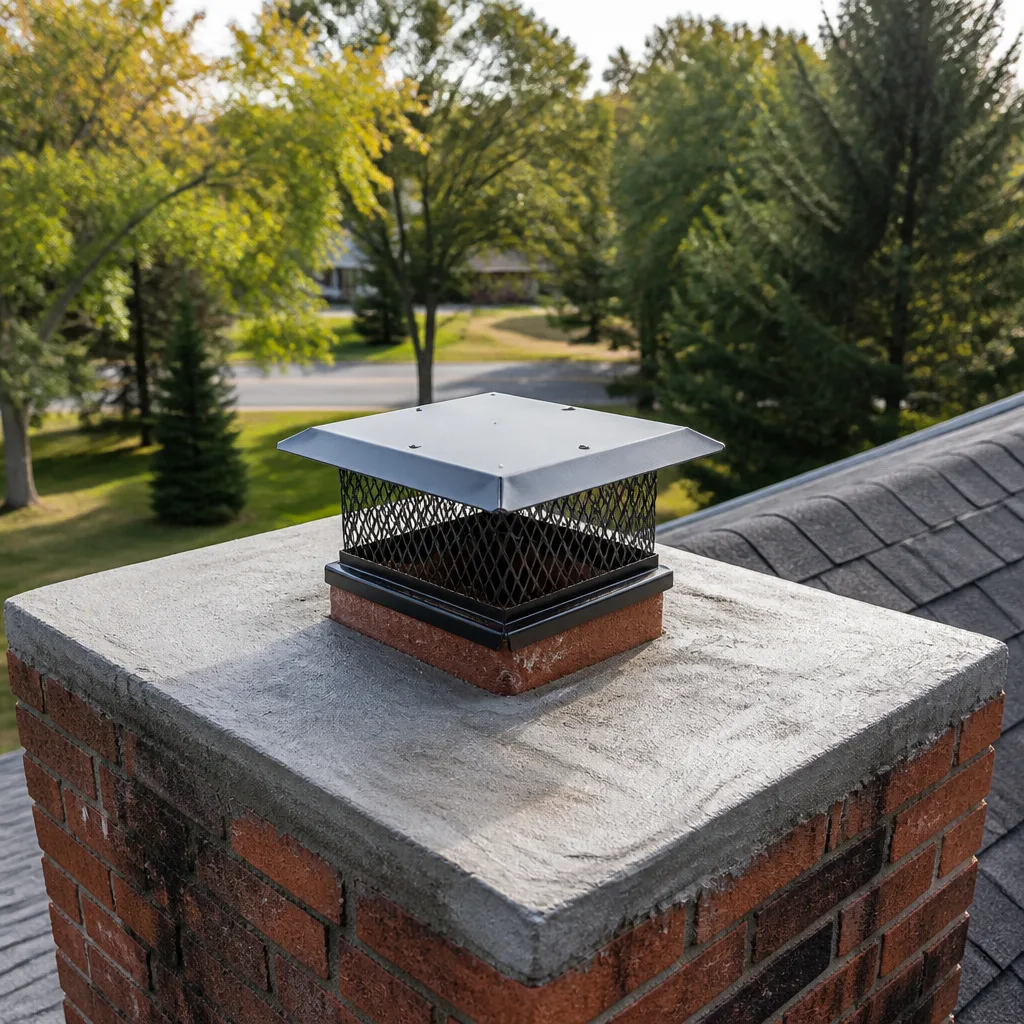
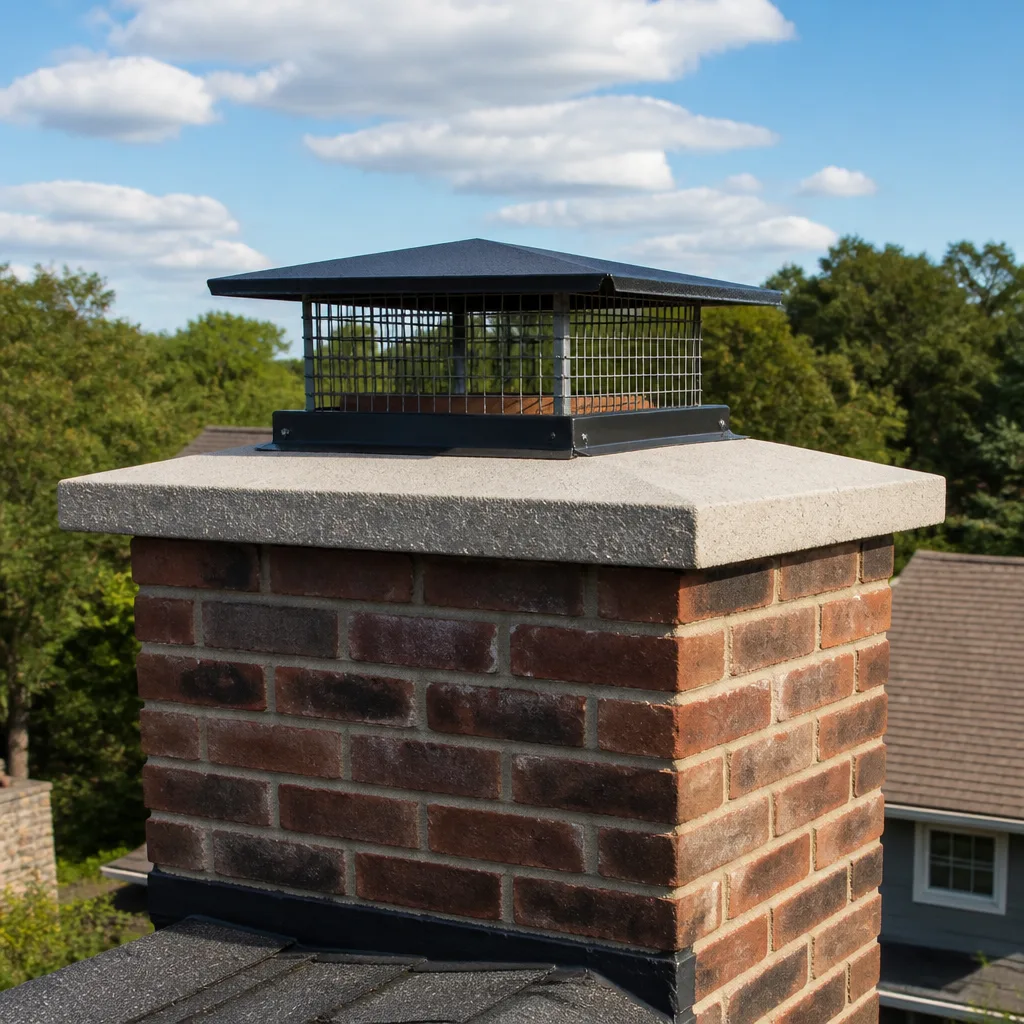
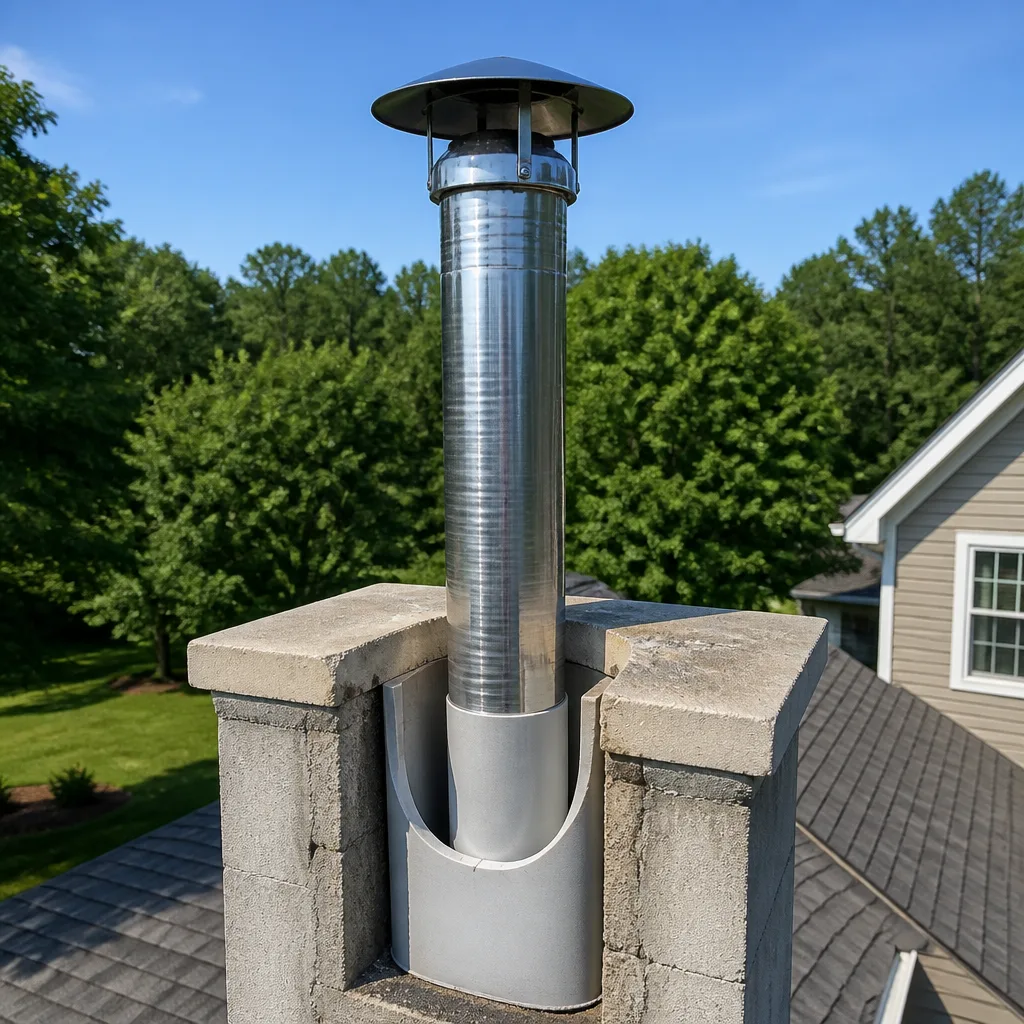
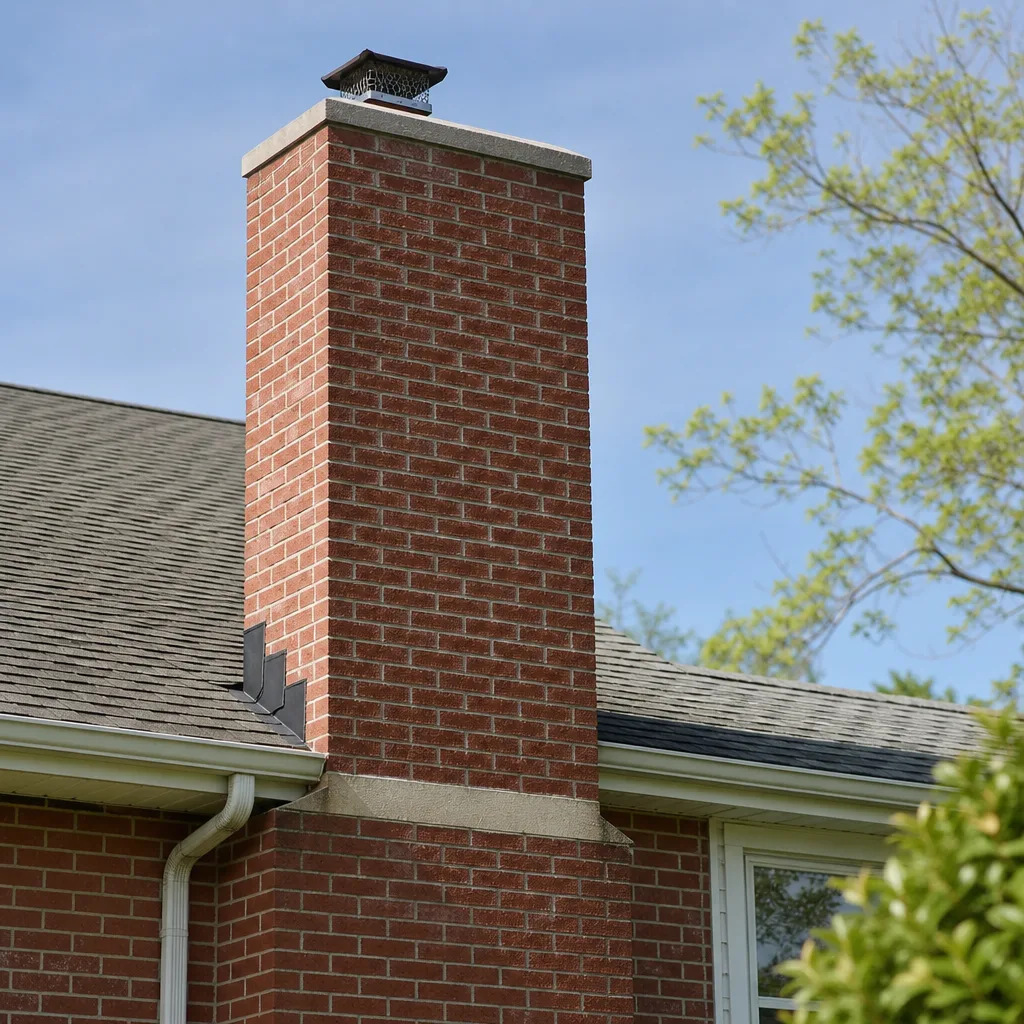
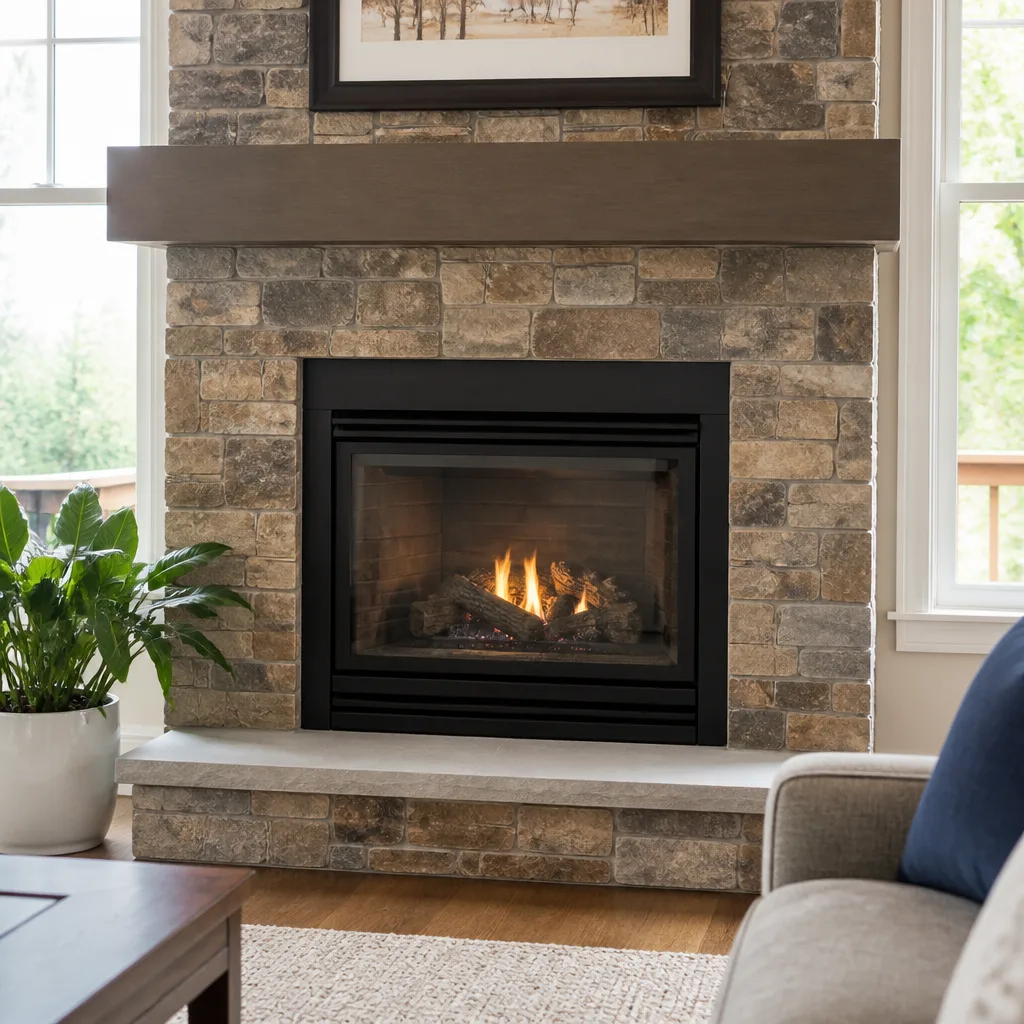
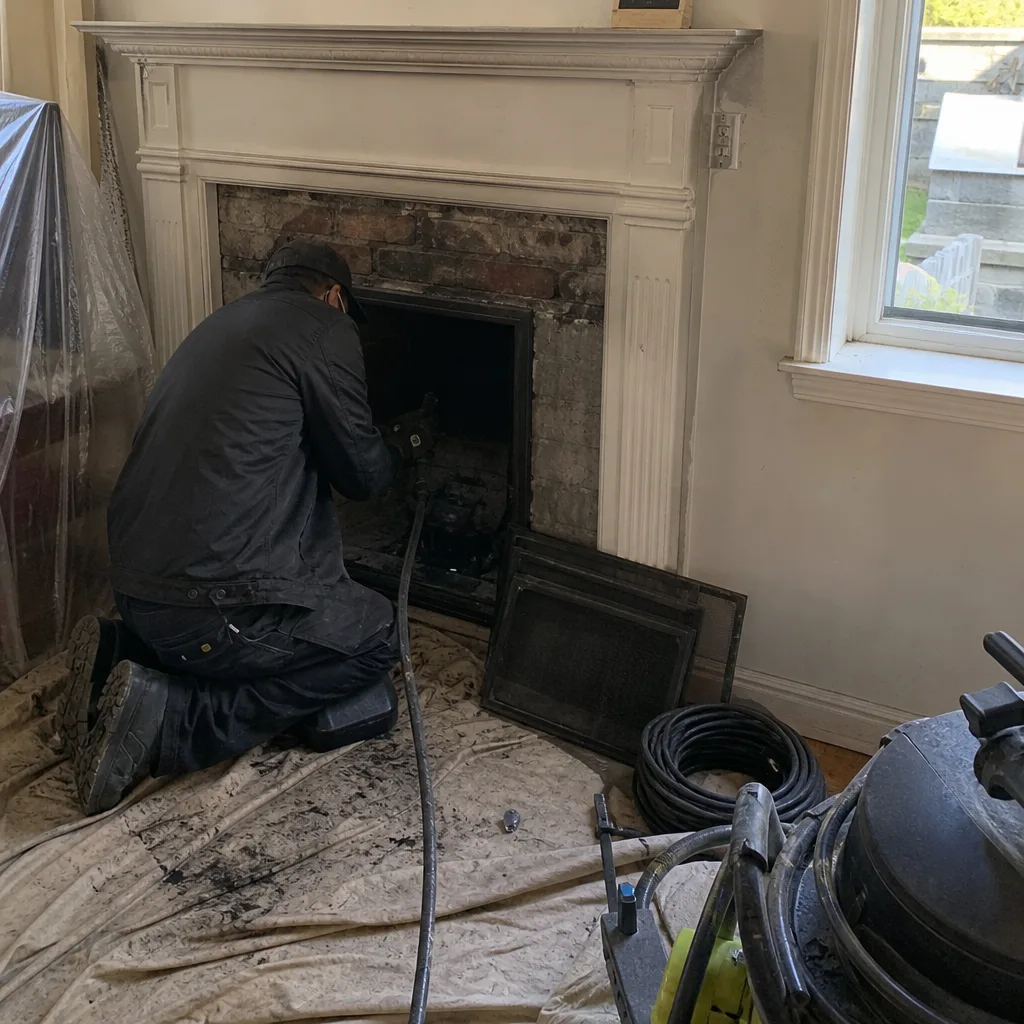 Before
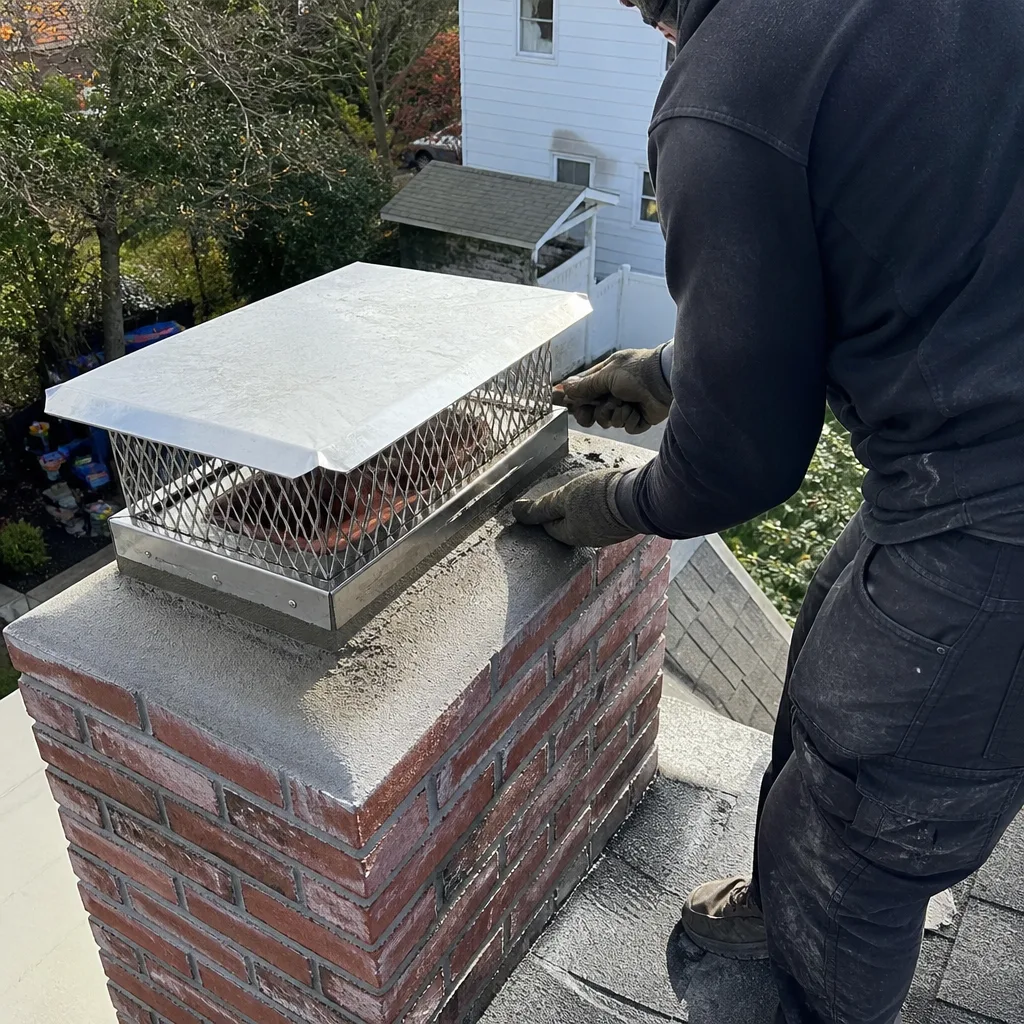 After
After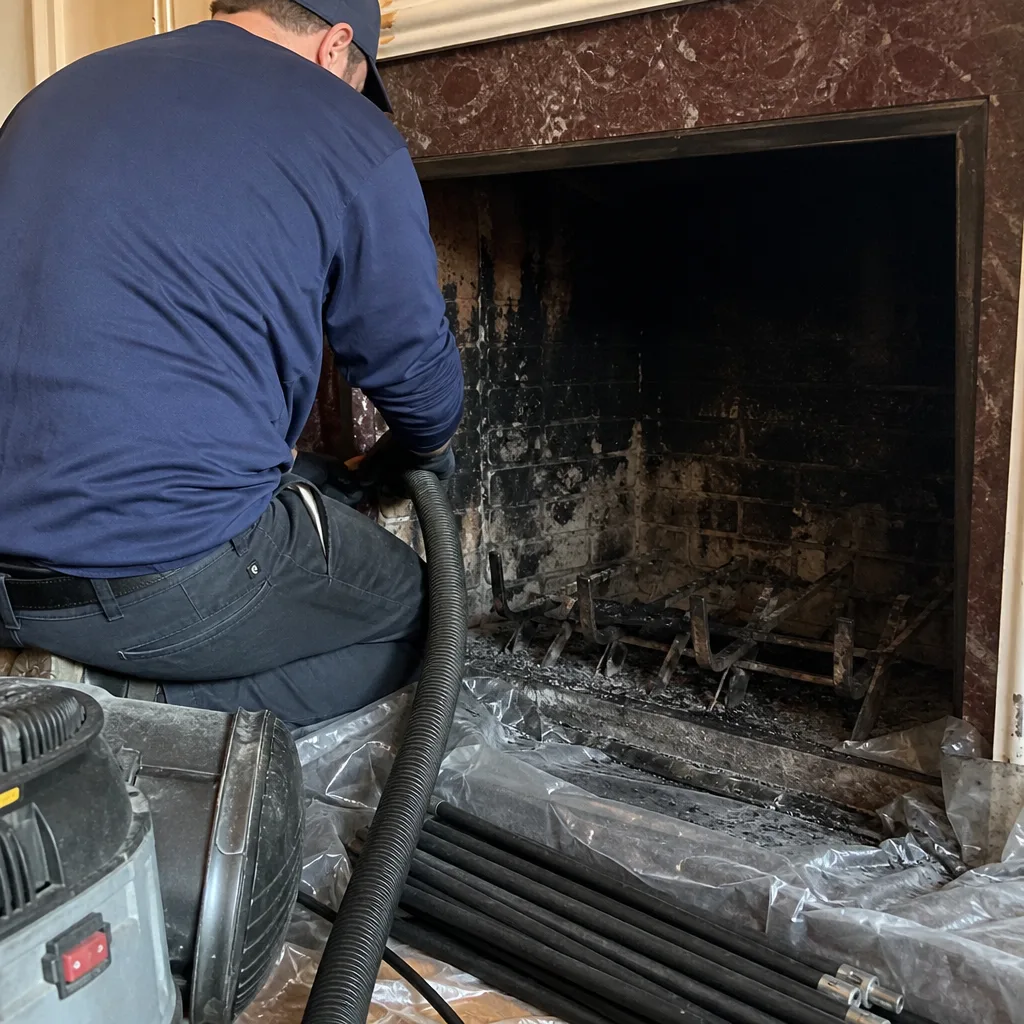 Before
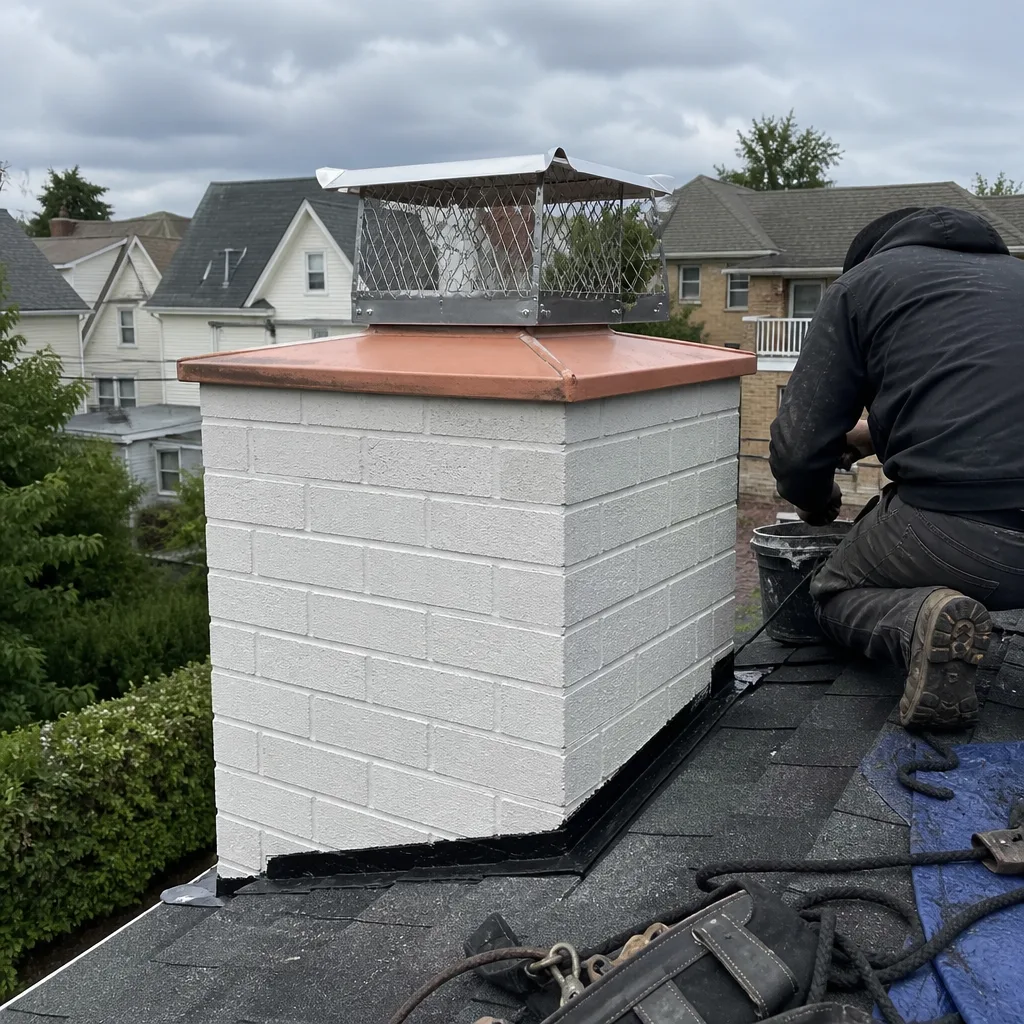 After
After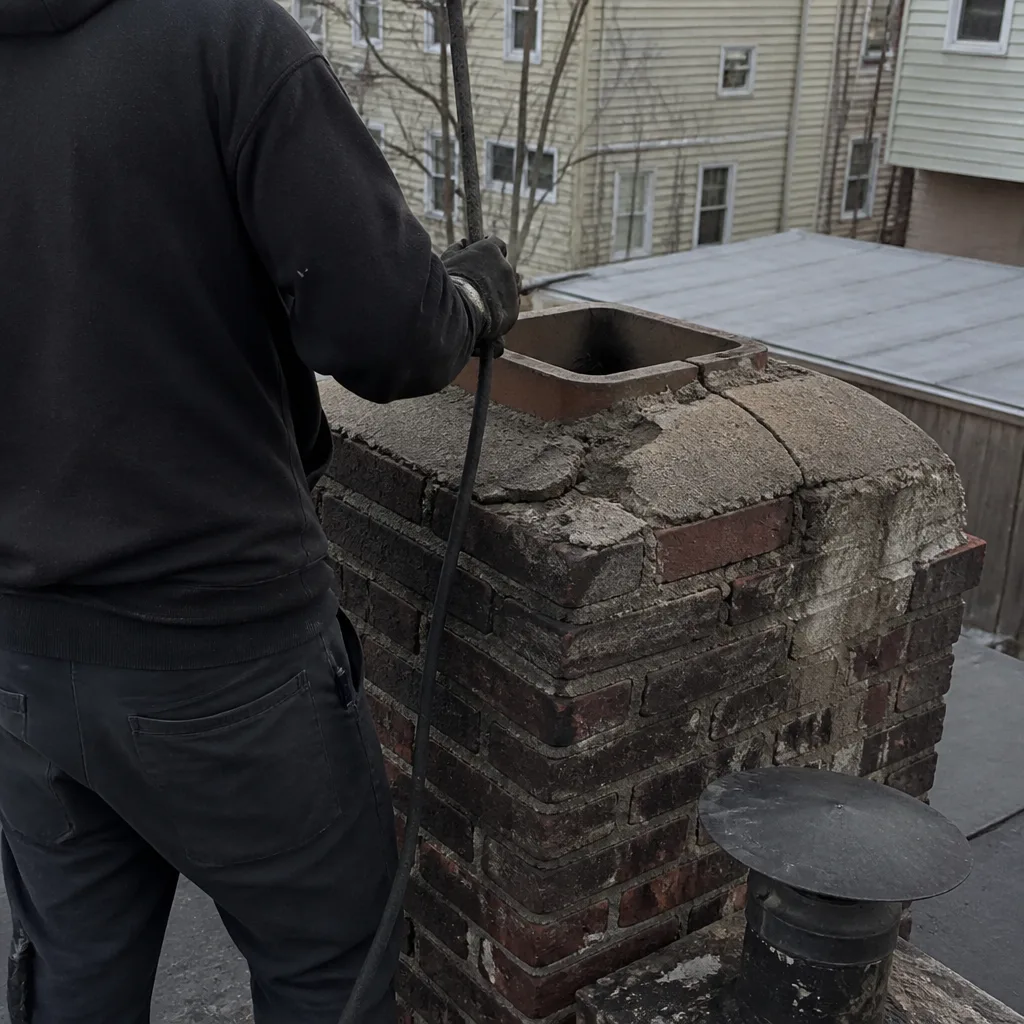 Before
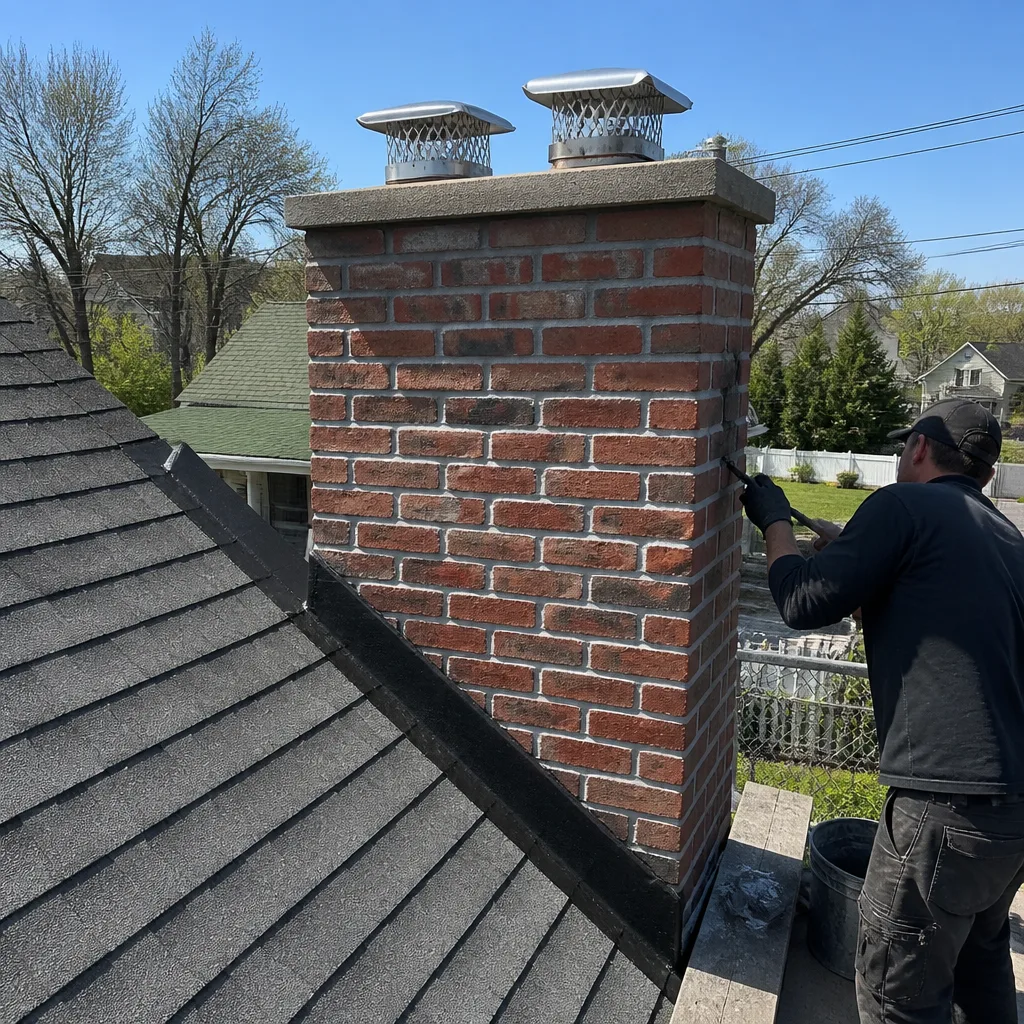 After
AfterFast, Reliable Chimney Cap & Crown Across Long Island City
A chimney cap and crown replacement in Long Island City typically runs $450-$950 for a standard single-flue cap, and $900-$2,200 when a poured or coated crown needs rebuilding first. Most jobs on attached Hunters Point row houses take one full day because roof access is tight and the stacks are shared. Call (929) 822-6306 and we’ll give you a flat number before a single tool comes off the truck.
If you own a pre-war brick row house or converted loft anywhere from Vernon Boulevard to 44th Drive, you already know the problem: your chimney was built for coal, converted for gas, and the cap and crown at the top haven’t been touched in decades. Wendell Pike and his crew at Top Hat Chimney work those roofs every week. We know how LIC stacks are laid out, how tight the setbacks get between adjoining buildings, and where the East River wind does its worst. The quote you get on the phone is the invoice you pay when the job’s done. That’s been the rule since 1999.
Key Takeaways:
- Standard cap replacement in Long Island City: $450-$950; crown rebuild with cap: $900-$2,200.
- Shared flues in attached Hunters Point row houses change everything about how a crown must be built and sealed.
- Wind-driven rain off the East River accelerates crown spalling on western-facing buildings. You’ll see it first on Vernon Boulevard and Center Boulevard.
- Every job includes camera footage so you see the condition of your flue and cap before you spend a dime on repairs you may not need.
- Call (929) 822-6306 for a free estimate. Wendell answers the phone more often than not.
Why Top Hat Chimney Is Long Island City’s Preferred Chimney Cap & Crown Company
We’re a locally owned, owner-operated chimney company, not a franchise that rotated into Queens last spring. Wendell Pike started this business in 1999, and his name is on the license. Our service area includes all of Long Island City, and scheduling is coordinated from our New York City office so a crew can reach Hunters Point, Court Square, or Queens Plaza on short notice.
Long Island City customers call us for one reason mostly: they’ve already tried the national guys, got a low ball number on the phone, and watched it climb once the technician got a look at the shared stack and said the crown was “worse than expected.” We don’t play that game. Our Chimney Cap & Crown team gives you a flat price before work begins, and every job is backed by the 90-Day Done Right Promise in writing. If it’s not right, one call brings us back at no charge. Ask anyone on your street who’s used us.
We answer our phone with a live person around the clock, and the sweep who shows up at your door is background-checked, uniformed, and gives you a real arrival window that we actually honor. If that window slips, we call you first. That’s how it should work, and it’s how it works with us.
Our Chimney Cap & Crown Services in Long Island City
Cap Installation
If your Long Island City chimney has no cap at all, you’re leaving an open hole in your roof that lets rain, pigeons, and debris drop straight into the flue. On converted warehouse lofts around Jackson Avenue, we regularly pull old factory exhaust stacks with no cap and a flue full of leaves. We install stainless caps sized to the actual flue diameter, not whatever the hardware store had on the shelf.

Cap Replacement
Rusted-out caps are the most common call we get in Long Island City, particularly on Hunters Point buildings within two or three blocks of the water. Salt air and wind-driven rain eat galvanized caps faster than anything. We replace them with stainless systems from DuraFlex, Famco, or Gelco, then secure them so a nor’easter doesn’t send the thing into your neighbor’s skylight.

Crown Repair
The crown is the concrete or mortar slab that caps the top of the chimney structure itself, and in Long Island City’s pre-war attached housing, crowns fail faster than anywhere we’ve worked. Freeze-thaw cycling off the East River pushes water into hairline cracks, the face spalls off in chunks, and then water migrates down into the shared flue liner below. We rebuild crowns with proper slope and a drip edge so water sheds away from the flue instead of sitting on it.

Crown Coating
When the crown is structurally sound but starting to show hairline cracking, a coating system like HeatShield or a good waterproof crown sealer can buy years of service without a full tear-out. On a five-story LIC walk-up, that’s the difference between a $400 job and a $2,500 rebuild. We’ll show you the camera footage and tell you honestly which one you need. More often than not, the smaller fix is the right one.

Multi-Flue Cap and Custom Cap
Shared stacks on attached Long Island City row houses usually have two, three, or four flues running side by side within one brick structure. Each one needs its own properly fitted cap, or a single multi-flue cap sized to the entire crown. For converted industrial buildings with odd rectangular flues, we fabricate custom caps that match the opening exactly. A misaligned “universal” cap on a 1910 tenement flue isn’t a repair, it’s a rain funnel.
What happens when you call
- 1
A real person answersNo phone trees - you reach a local pro.
- 2
You get an upfront price rangeHonest numbers before anyone is dispatched.
- 3
A background-checked tech heads outLicensed & insured, dispatched right away.
- 4
You approve before work beginsNothing starts until you say go.
Trusted Brands We Service in Long Island City
We install and service products from DuraFlex, HeatShield, Gelco, Olympia Chimney, Famco, and Copperfield, because these are the systems that hold up in Long Island City’s waterfront weather. We keep common cap sizes and crown materials on the truck, which means fewer trips back to the supplier and a faster job for you. If your existing cap is from one of these brands and it’s failing early, we’ll find out why instead of just bolting on an identical replacement that dies the same way.
Common Chimney Cap & Crown Problems We See in Long Island City Homes
- Wind-driven rain on western-facing crowns. Hunters Point buildings along Vernon Boulevard and Center Boulevard take the brunt of prevailing westerly winds off the East River. Rain gets forced into micro-cracks, winter freezes expand it, and the crown face spalls away. We see crowns on waterfront buildings fail five to ten years before identical construction two miles inland in Maspeth or Woodside.
- Decorative brick-overs hiding live flues. Condo conversions in Long Island City frequently capped a chimney stack with brick to make the roofline look cleaner, but the basement boiler flue is still running through that stack. When the crown under the brick-over fails, combustion gases have nowhere to go except backward into upper-floor units. NYC DOB boiler inspections occasionally flag it; we catch it first because we actually look inside before we touch anything.
- Converted factory exhaust stacks with the wrong cap. LIC’s warehouse lofts were built to vent coal smoke or industrial exhaust, and those stacks are enormous compared to a modern gas appliance flue. A wrong-size cap lets rain and birds in, and the unlined brick interior absorbs moisture that rots the crown from the underside. We see this constantly in the former factory buildings around 47th Avenue and 21st Street.
- Cross-contamination between attached properties. When two row houses share a single chimney stack and one owner’s crown or cap fails, moisture and condensation from the other side’s draft pattern gets pushed back through the gap. You’ll see staining on the party wall, or smell combustion odor in an upstairs room you never use. That’s a shared-stack problem, and it needs a chimney sweep who understands both sides of the wall, not just your side.
Pricing for Chimney Cap & Crown in Long Island City, NY
Here’s what a typical Long Island City job looks like in real dollars:
- Standard single-flue stainless cap installation: $450-$750
- Rusted cap replacement with flue inspection: $500-$950
- Crown repair (partial patch, crack sealing): $350-$700
- Full crown rebuild with proper drip edge: $900-$1,800
- Crown coating with HeatShield or comparable system: $400-$850
- Multi-flue cap on a shared row-house stack: $800-$2,200
- Custom cap for converted warehouse flue: $700-$1,500
Your price depends on roof access difficulty (a five-story tenement on a tight Hunters Point street costs more to stage than a two-story walk-up in Astoria), how many flues are in the stack, and whether we can reach the crown from a ladder or need to set up scaffold. We quote a flat number before work starts, and that number doesn’t move. We also run standing offers: $40 off any repair over $200, a free second opinion on any competing written estimate, no trip charge inside our service area, and 10% off always for seniors and veterans. Call (929) 822-6306 and we’ll have an actual price for you, not a range that stretches into “we’ll see when we get there.”
We Also Serve Cities Near Long Island City
Our crews cover the neighborhoods right around Long Island City as well: Sunnyside, Woodside, Astoria, and Maspeth. If you’re right across the Pulaski Bridge or up by Northern Boulevard, you’re in our regular service area and we know your building stock just as well as we know Hunters Point. Same flat pricing, same live person on the phone, same 90-Day Done Right Promise in writing.
The Long Island City Chimney Stack Problem Most People Never See
Long Island City’s Hunters Point blocks are packed with attached pre-war row houses and tenements built between the 1880s and 1920s. These buildings originally burned coal, had huge chimneys to match, and were converted to gas heat at some point without anyone relining the flue to the smaller diameter a modern gas boiler actually needs. That leaves an oversized, unlined brick flue that condenses moisture on the inside walls. The resulting soot and acid-laden condensation doesn’t just sit there; it migrates upward and attacks the crown from below while East River wind-driven rain attacks it from above.
Now add the shared-stack problem. On 45th Avenue in Hunters Point, our crew rebuilt a failed chimney crown on a four-story 1910 tenement that shares one stack with the adjoining building. The original crown had spalled into loose brick from years of East River wind-driven rain, and the multi-flue cap was rusted through at the base. We installed a DuraFlex stainless cap system with a custom water-repellent crown coating, then confirmed draft on both connected furnaces before any moisture could migrate into the shared flue liner. The neighbor’s side was already showing staining on the party wall. If we’d only looked at one side of that stack, the fix wouldn’t have held.
What makes Long Island City genuinely different from a mile inland in central Queens is that waterfront exposure combined with dense attached construction. Buildings on the same block in Hunters Point share chimneys, share rooflines, and share the same salt-laden westerly wind. A failed crown on one side of a stack becomes the other side’s problem within a season. That’s why we never treat a Long Island City cap or crown job as a one-flue repair; we check the whole stack and the adjoining property whenever we can see it, because the problem rarely stops at the property line.
And for anyone in a converted factory or warehouse building, the old industrial stacks create a different issue entirely. Those flues were originally sized to vent coal smoke. The new owner during a condo conversion stuck a modern gas boiler in the basement and connected it to a chimney that’s now three times too big and was never relined. The oversized cap, if there is one, doesn’t shed water properly, and the crown underneath is the original 1920s mortar holding the upper courses of brick together. We inspect that with a camera before recommending anything. Sometimes the fix is a proper cap and a crown coating. Sometimes the stack needs a structural rebuild. You’ll see exactly why on the footage before we ask you to spend a dollar.
How We Approach Shared Flues and Attached Stacks
Working on a shared chimney in Long Island City means coordinating more than one household. If the stack serves two attached row houses, the crown repair on one side often requires working over both properties, and sometimes both owners need to be aware of what we’re doing and why. We’ve handled dozens of these jobs, and we’ll walk you through the sequence in plain English. No boilerplate, no pressure, and no recommendation that we can’t back with camera footage.
We also understand the practical side of working on tight LIC streets. Your roof access might be a ladder through a hatch on the top floor of a walk-up, or a bucket truck if street parking permits allow. It takes longer on a shared stack because we’re testing draft on every connected flue before we’re done. Our flat quote accounts for that reality. If we misread the situation, that’s on us, not on you.
Serving Long Island City, NY - Our Local Coverage Area
We’re based in the Long Island City area and know this community well. Use the map below to see our service coverage - if you’re nearby, we can almost certainly help.
FAQs - Chimney Cap & Crown in Long Island City
A shared stack means the crown and cap serve more than your flue, so we cannot treat it as a single-owner job. We inspect the entire stack, test draft on both sides, and often need to coordinate with the adjoining owner. The fix has to shed water for the whole top of the structure, not just your half. Call (929) 822-6306 for an exact quote if you’re on a shared-stack row house.
The East River waterfront exposure is the difference. Prevailing westerly winds drive rain directly into the vertical faces of crowns on buildings along Vernon Boulevard and Center Boulevard, and winter freeze-thaw cycles expand every hairline crack into spalling. Buildings a mile inland simply don’t absorb that same wind-driven moisture load. In Hunters Point, a poured crown that would last 20 years in Astoria often needs rebuilding in 10 to 12.
Yes. We see this regularly across Long Island City’s converted tenements and lofts. A renovation simply bricks over the top of the stack for looks while the basement boiler flue is still connected and venting through it. If the crown or hidden cap fails, combustion gases can’t exit the stack and instead find their way into upper-floor living spaces. We check for this on every LIC job with a live flue test before and after any cap or crown work.
For a factory exhaust stack repurposed for a gas appliance, the cap has to be fabricated or fitted to the exact flue dimensions, which are often much larger than any standard size. We typically recommend a stainless custom cap from DuraFlex or Famco sized to the flue opening, with a drip edge that sheds water away from the crown. A generic “large” cap clamped onto an oversized industrial flue is a rain leak waiting to happen.
Every year, no exceptions. Waterfront buildings in Long Island City should have the cap, crown, and flue inspected annually because the freeze-thaw cycle and salt air accelerate deterioration quickly. On most Queens blocks, an every-other-year inspection works fine. On the East River edge, we recommend annual checks, especially after any winter with multiple hard freezes. The cost of an inspection is far less than a full crown rebuild and cap replacement after a winter of neglected spalling. Call (929) 822-6306 to schedule one, or for a free estimate on cap and crown work.
Get a Straight Quote for Chimney Cap & Crown Work in Long Island City
If your cap is rusted, your crown is spalling, or you just bought a row house or loft in Long Island City and have no idea what’s at the top of the stack, call (929) 822-6306. Wendell picks up more often than not. We’ll talk through what you’re seeing, give you a flat number over the phone, and set a real arrival window. If we show up and find out the job doesn’t need doing, we’ll tell you that too, camera evidence in hand. No charge for the second opinion. No trip charge inside our service area. Free estimates, always.
Written by Wendell Pike, Owner at Top Hat Chimney.