
Last updated September 10, 2026
Level 1 sweep and inspection to the NFPA 211 annual standard - flue, crown, cap, and flashing checked and photographed
Chimney sweep logs do not sweep chimneys. They loosen some creosote - which then falls where a brush and vacuum still have to collect it.
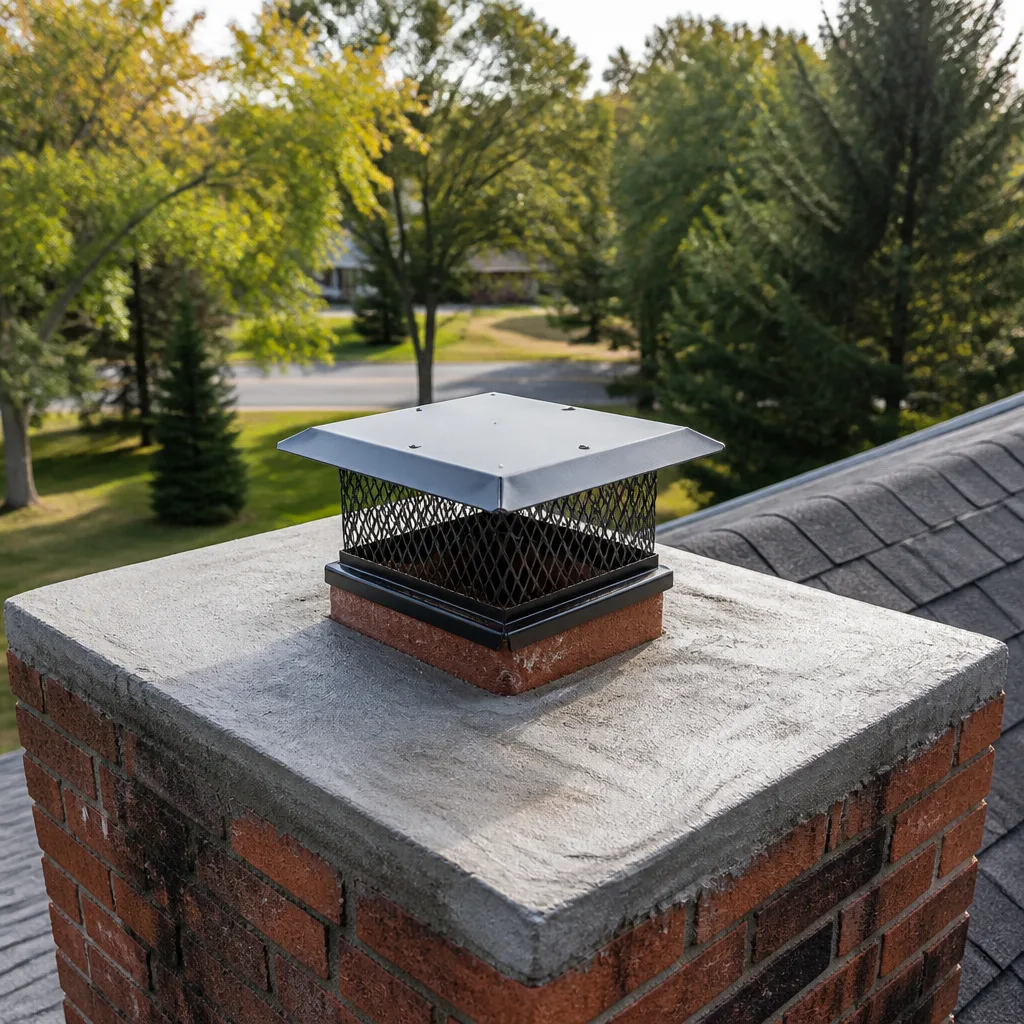
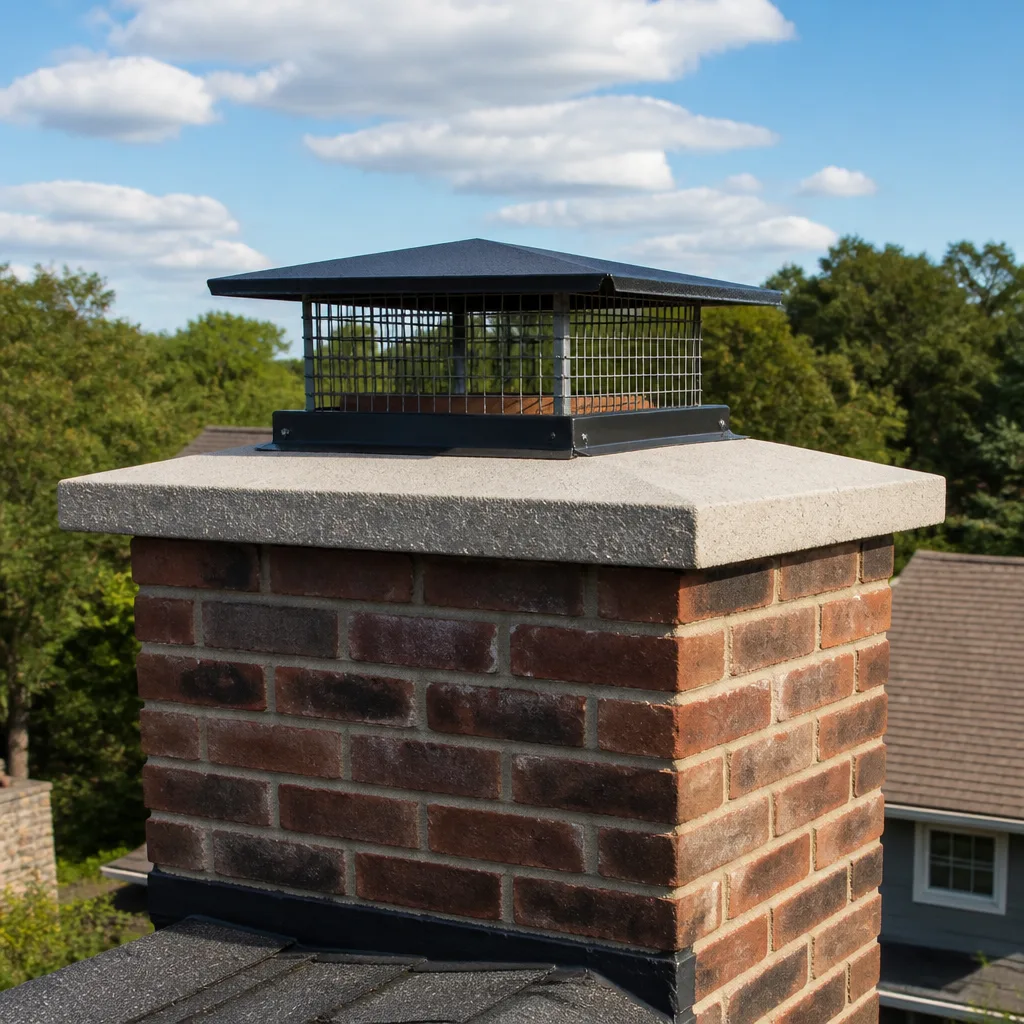
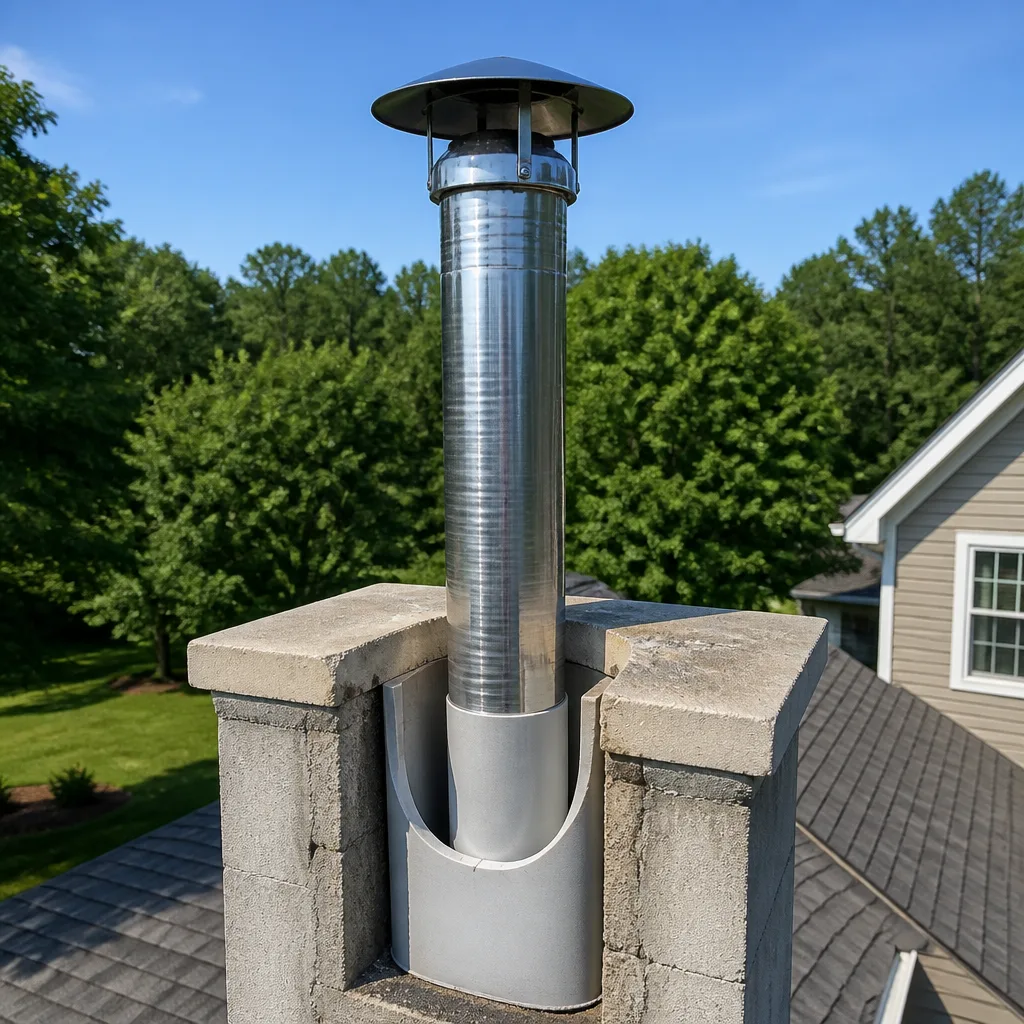
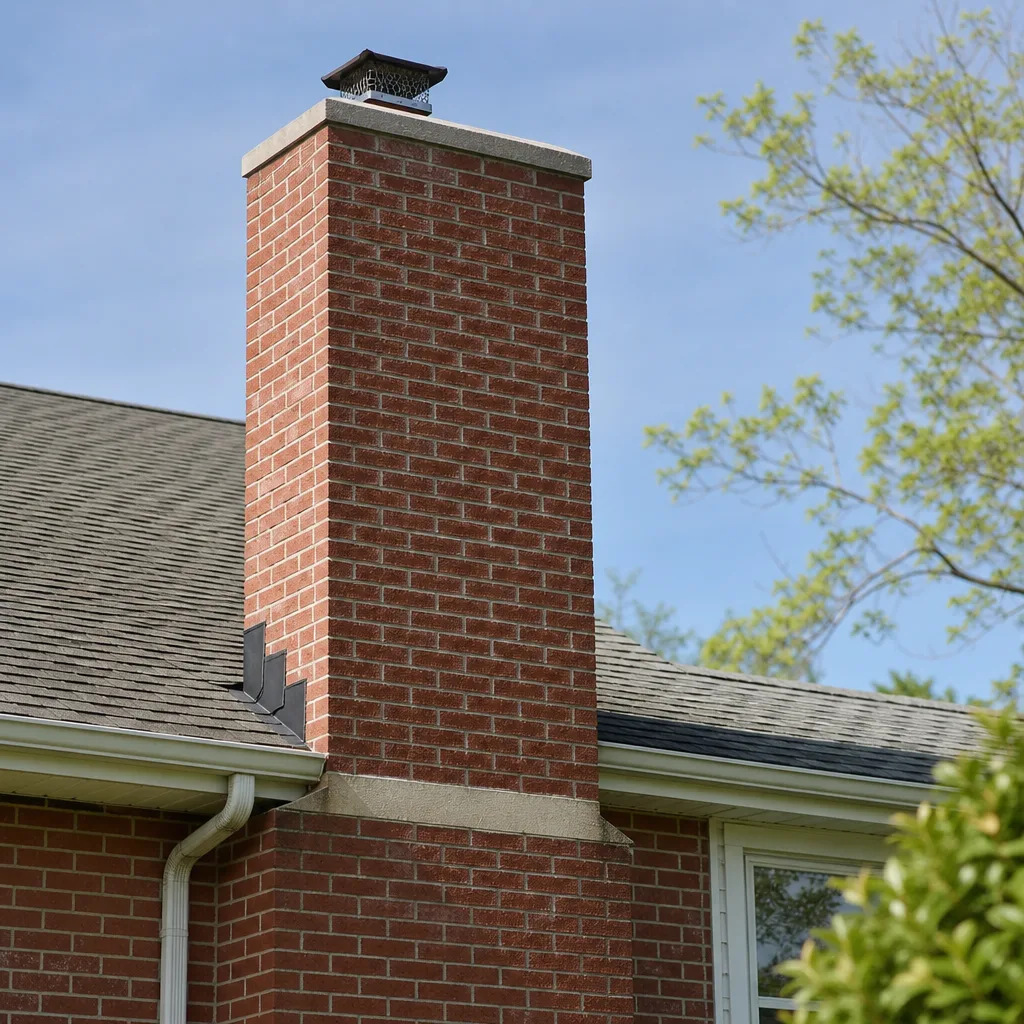
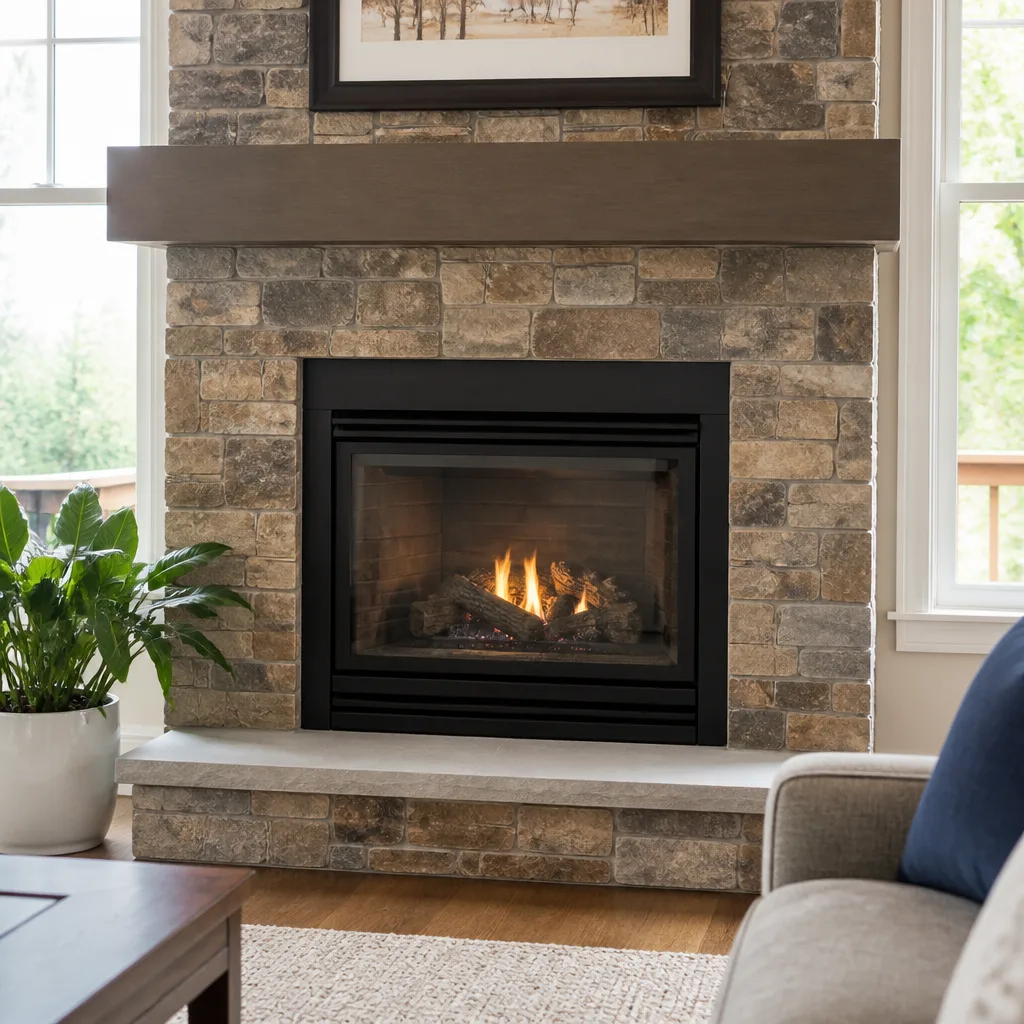
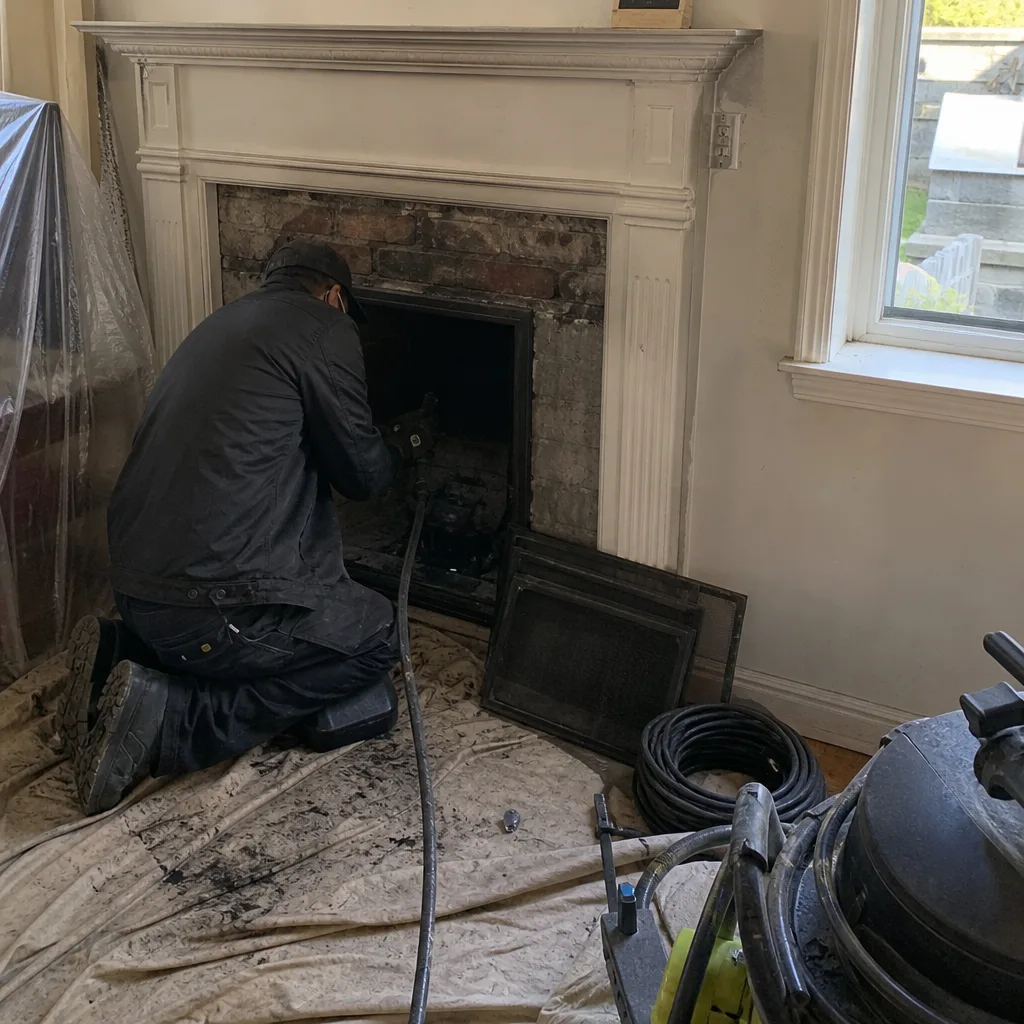 Before
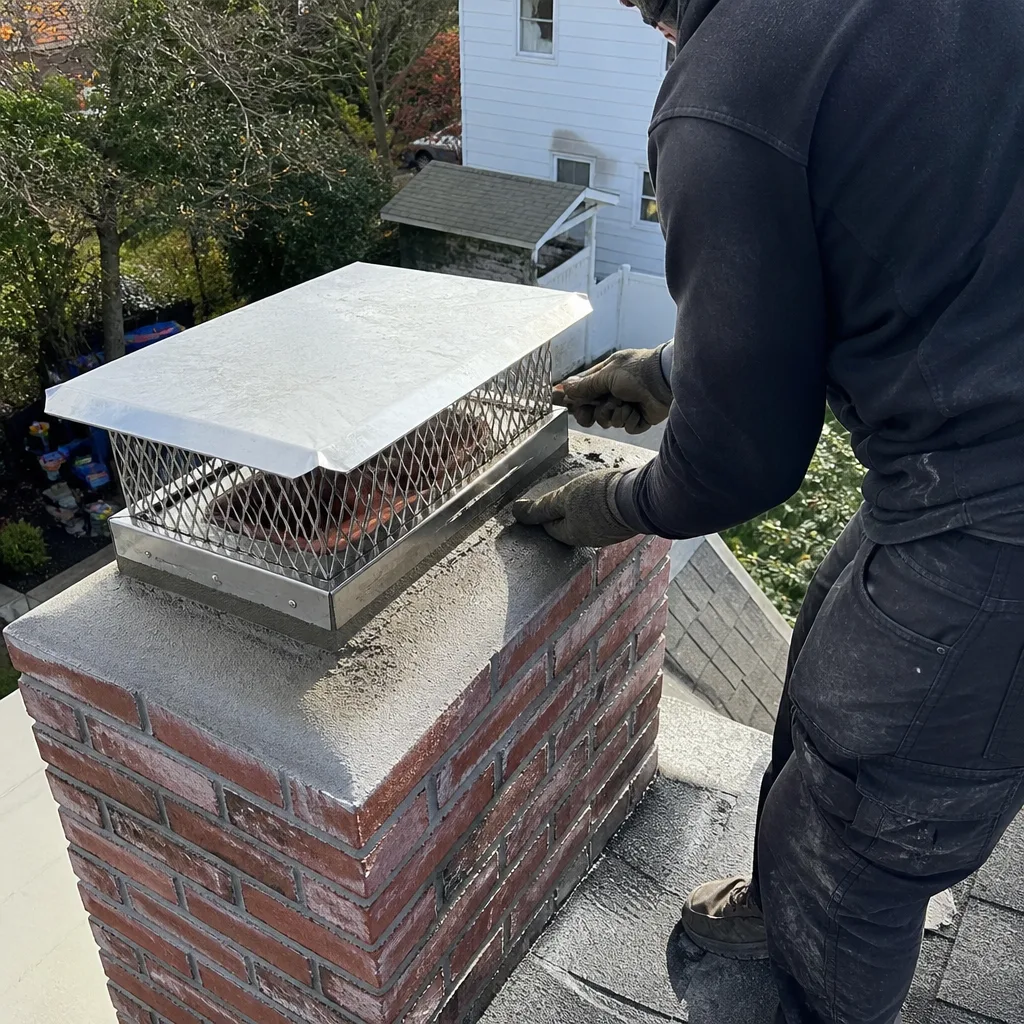 After
After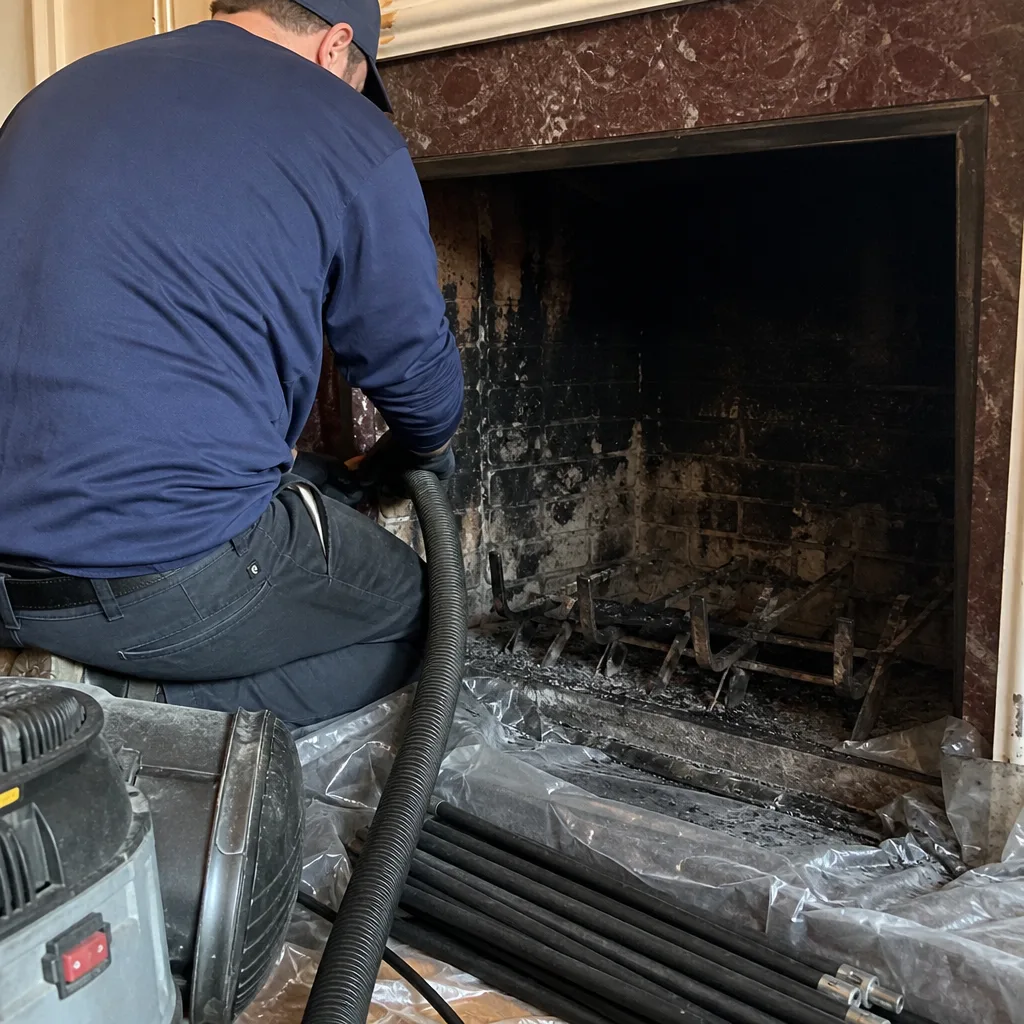 Before
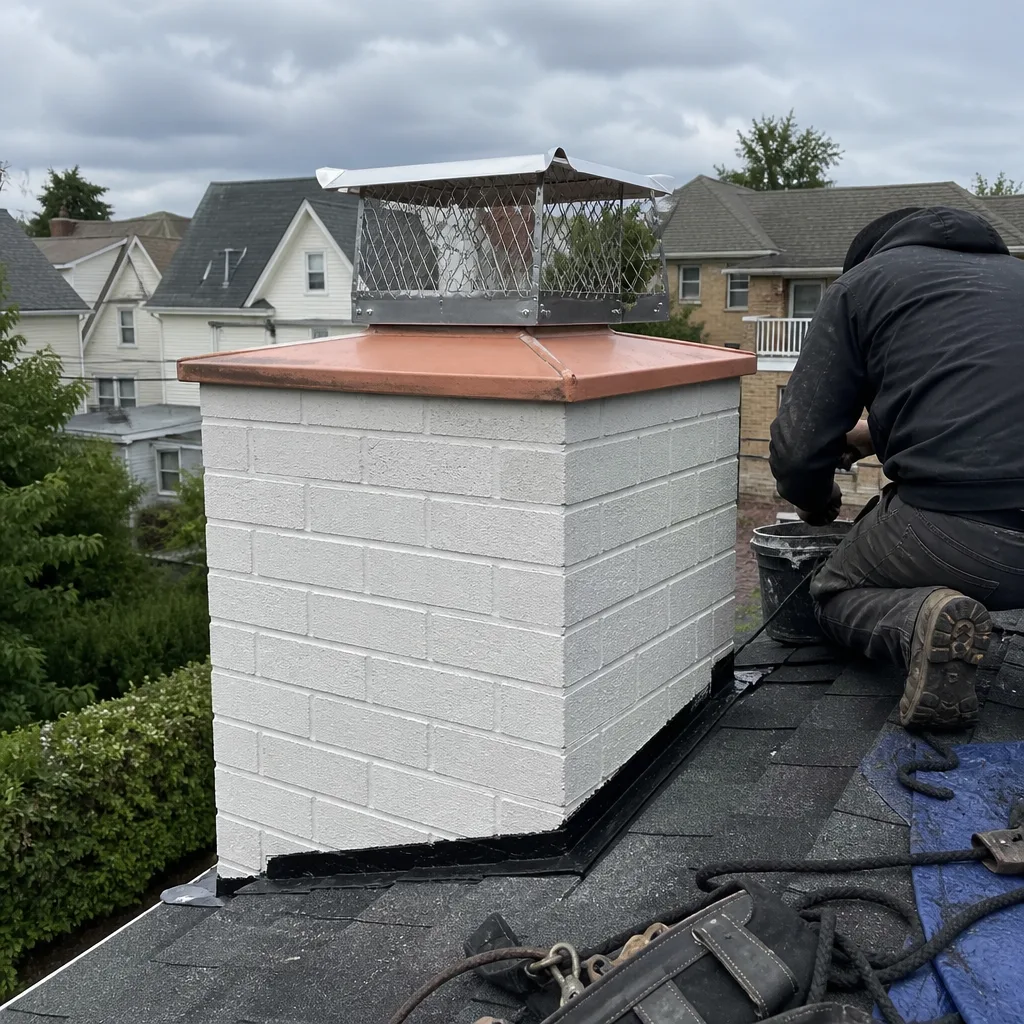 After
After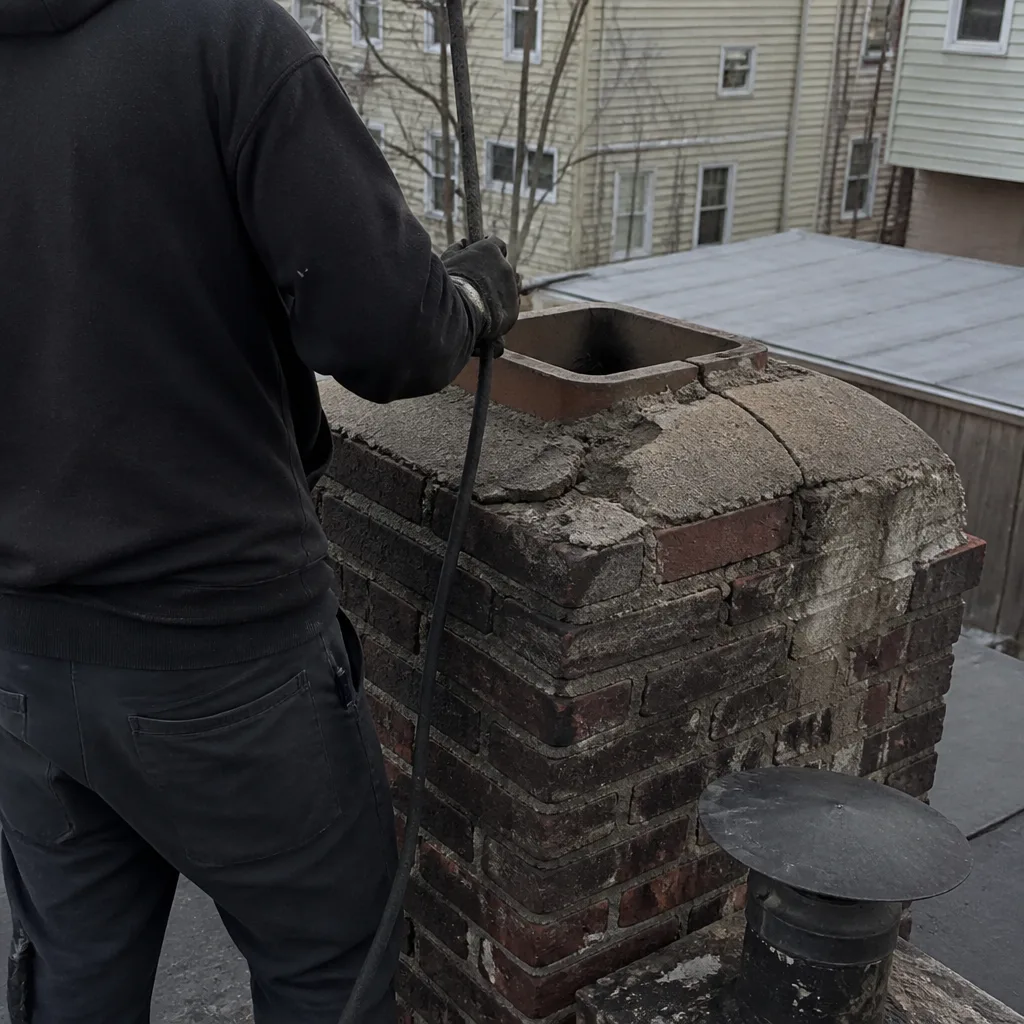 Before
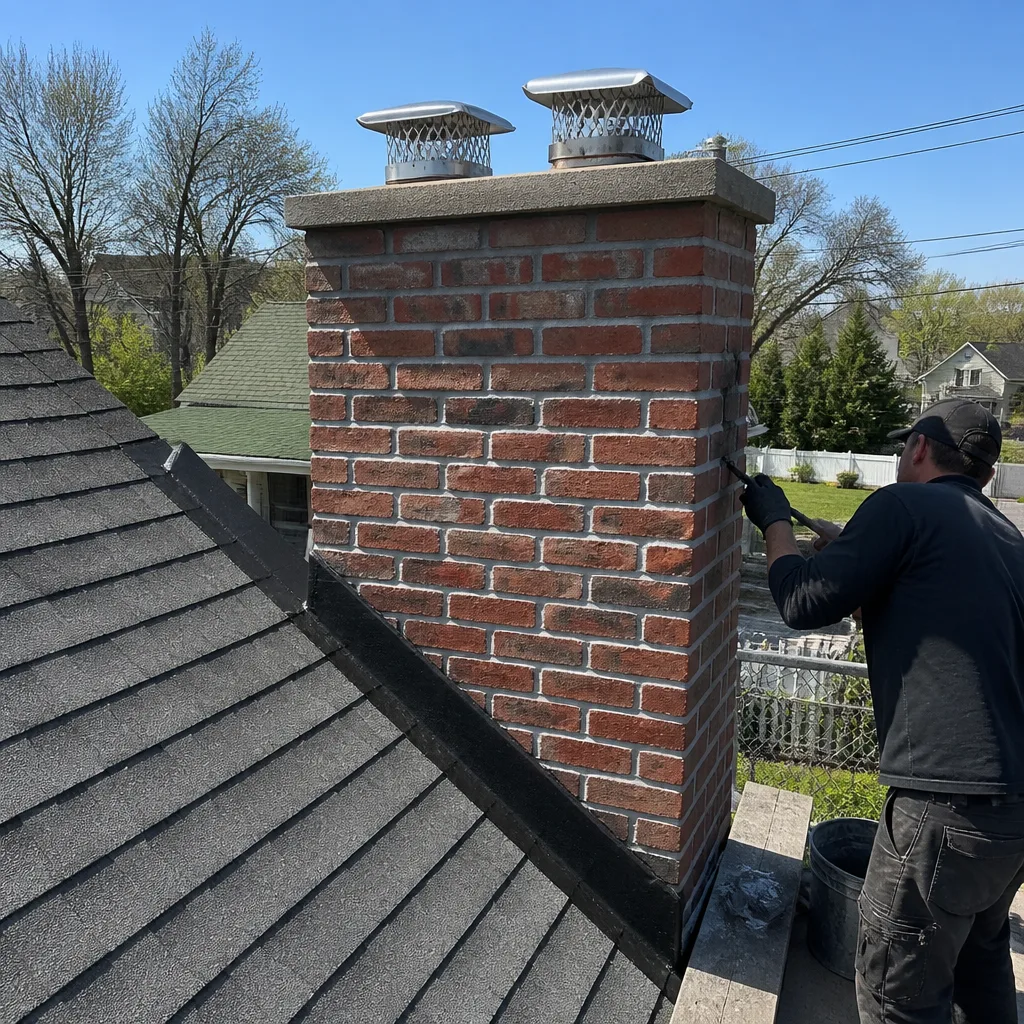 After
AfterDIY vs Professional Chimney Cleaning: The Astoria Homeowner’s Decision Guide
Walk into any hardware store in Queens and you’ll find chimney brushes and fiberglass rods hanging on the shelf for under a hundred dollars. They look simple. They are simple. The problem is that “simplicity” assumes a straight, accessible flue with light creosote and a homeowner who genuinely wants to spend a Saturday afternoon on a roof. In Astoria, where our housing stock ranges from 1920s brick row houses to newer condos with gas inserts, the flues that actually match that description are in the minority. This guide sorts out the few situations where DIY cleaning makes honest sense from the six where calling a sweep saves you money, time, and potentially a fire, and points you to more guides & resources when you’re ready. By the end, you’ll know exactly which category your chimney falls into.
Quick Answer
DIY chimney cleaning is only genuinely reasonable for a straight, single-story wood-burning fireplace flue with light, powdery creosote and a homeowner who is comfortable and safe on a roof. For most Astoria homes, the answer is professional, because gas appliance flues, tile liners in unknown condition, and multi-story access create risks and blind spots that a brush kit cannot address.
Table of Contents
- When DIY Chimney Cleaning Actually Makes Sense
- Six Scenarios Where DIY Chimney Cleaning Is a Mistake
- Why Gas Fireplace and Insert Flues Are Not DIY Territory in NY
- What a Brush Kit Cannot Do: The Inspection Gap
- The Honest Cost Comparison: DIY vs Professional Over Three Years
- A Decision Framework for Your Exact Appliance and Flue
- What a Professional Cleaning Actually Includes in Astoria
- Understanding Creosote Stages: What You’re Actually Brushing
When DIY Chimney Cleaning Actually Makes Sense
We do not tell every homeowner to hire us. Wendell has said for years that there are two scenarios where a do-it-yourself cleaning is completely reasonable. The first is a straight, single-story wood-burning fireplace flue with light, first-stage creosote and clear access from the roof. The second is when the homeowner already owns the right equipment, has used it before, and sees only a thin layer of soot, not the shiny, tar-like glaze that signals a bigger problem. In these cases, a brush kit from a hardware store does a passable job removing loose powdery creosote.
But here is what we have observed across Astoria: the number of homes that actually meet all of these conditions at once is small. Many of the older rowhouses on streets near Ditmars and Broadway have chimneys that were built with tile liners. If those tiles have hairline cracks you cannot see from the roofline, brushing them can make the problem worse. And if your flue bends or offsets somewhere between the firebox and the cap, a fiberglass rod kit will not follow the curve, no matter how thorough you think you are being. So before you buy the kit, make sure you know exactly what is above the firebox. Most homeowners do not. That is not a judgment. It is just the reality of what sits behind brick.
What the Right Conditions Look Like
- A wood-burning fireplace or wood stove, never a gas appliance
- A flue that runs straight up with no bends or offsets
- Single-story access with a low-pitch roof you can stand on safely
- Light, flaky creosote that you can see but has not built up thickly
- A chimney cap you can remove and replace without damaging the mortar
- No history of water leaks, spalling brick, or smoke odors in the house
If your situation matches every line on that list, a DIY brush cleaning is defensible. We have no interest in talking you out of it. But if even one line does not match, keep reading, because you are about to save yourself from the most common DIY mistake we see in Astoria: brushing a flue that needed repair, not cleaning.
Six Scenarios Where DIY Chimney Cleaning Is a Mistake
The decision to clean a chimney yourself fails in predictable ways. Here are the six scenarios that account for nearly all of the damage we get called to fix after a homeowner attempt in Astoria.
- Gas appliance flues. Gas fireplaces, gas inserts, and gas water heaters vent through flues that carry combustion byproducts you cannot see and should not be handling without knowing what a properly functioning vent looks like. More on this in the next section.
- Tile liners in unknown condition. Most pre-1970 Astoria homes have clay tile liners. If those tiles are cracked or shifted, a brush can catch an edge, chip a tile, and turn a four hundred dollar cleaning into a four thousand dollar liner repair. You cannot see tile condition from the roof. You need a camera.
- Stage two or stage three creosote. Brushes remove stage one, the light sooty powder. Stage two is a thicker, flaky, tar-like buildup. Stage three is a hardened glaze that no brush you can buy at a hardware store will remove. We use chemical treatments and specialized rotary tools for those. A brush just polishes the surface and leaves the fire hazard in place.
- Multi-story homes or steep roofs. Many Astoria rowhouses have roof pitches that are not friendly to a homeowner with a brush kit. A fall from a two-story roof is serious. We carry full safety equipment and harnesses. You likely do not. There are exactly zero chimney cleanings worth a broken back.
- Unlined or partially lined flues. Some older Astoria brick chimneys were built without clay liners or have liners that have separated at the joints. Brushing an unlined flue does nothing useful and can dislodge old mortar that then falls into your smoke chamber.
- When you need documentation. Insurance claims, home sales, and some local fire inspections require a professional cleaning record. A DIY brush job produces nothing you can show an adjuster. We provide written documentation with every cleaning, and that paper has saved homeowners money more times than I can count.
Why Gas Fireplace and Insert Flues Are Not DIY Territory in NY
Your flue does not care how the fire looks. It cares how it breathes. When you burn natural gas, the combustion produces carbon monoxide and acidic water vapor. A properly vented gas flue carries those byproducts up and out. A gas flue that has been compromised, whether by a deteriorated liner, a blocked cap, or improper installation, can send carbon monoxide back into your living space. That is not a scare tactic. That is the chemistry of what happens when a gas appliance does not vent correctly.
In New York, gas appliance venting is governed by specific code requirements. Gas fireplaces and inserts are checked for proper draft, liner sizing, and combustion air. A brush kit does none of that. It stirs up whatever is in the flue and leaves you believing the job is done. We have seen homeowners in Astoria brush a gas flue and then run the fireplace, unaware that the liner had visually undetectable issues that a trained eye and a camera would have caught immediately.
What a professional does with a gas flue is different from what a brush does. We inspect the liner for deterioration. We check the termination cap for blockage. We verify that the damper is properly positioned and functioning. We look at the joints and connections. None of that is glamorous work. But it is the work that keeps carbon monoxide outside of your home. The acid in gas exhaust is another factor. Over time, it degrades liners, especially older clay tile. A homeowner with a brush sees black discoloration and assumes it is dirty. A sweep sees a liner that is being eaten from the inside and schedules the repair before it fails.
If you have a gas fireplace, gas insert, or gas log set in Astoria, leave the flue alone. Call a sweep who will do more than brush. Call someone who will verify that the vent is actually doing its job. The fireplace services we offer in Astoria include that verification as a standard part of every call. It is not an add-on. It is the point.
What a Brush Kit Cannot Do: The Inspection Gap
The single biggest argument for professional chimney cleaning in Astoria has nothing to do with cleaning. It is the inspection. A brush kit removes some amount of creosote. It cannot look inside your flue and tell you what is wrong. Here is what a trained sweep sees that a brush never will.
Liner integrity. Cracked clay tiles are a fire hazard because they expose combustible materials to heat. Hairline cracks are invisible from the roof. We lower a camera down the flue and look at every inch. The camera footage and a plain-English verdict, every time, no exceptions. That is our standard, and it is the reason homeowners in Astoria call us for cleanings that always turn out to include an inspection, because a cleaning without an inspection is just sweeping dust around a problem.
Creosote stage classification. Knowing whether you are dealing with stage one, stage two, or stage three determines the entire approach. First-degree creosote is a brush job. Third-degree is a glaze. Catch it early and you pay for a cleaning. Miss it and you pay for a chemical treatment or a new liner. A brush gives you no information about what you are actually up against.
Cracked or deteriorated mortar joints. The masonry between flue tiles breaks down over time, especially with the freeze-thaw cycles we get in Astoria winters, which is why seasonal chimney cleaning care for Astoria matters year-round. Water gets in, freezes, expands, and widens the gaps. A brush slides past these defects. A camera documents them. Without that documentation, you cannot make an informed decision about whether the chimney needs a crown repair or a full liner replacement.
Documentation for insurance and inspection. We already touched on this, but it matters. If your home is in a historic district in Astoria or you are preparing to sell, you may need paperwork showing the chimney was professionally maintained. A receipt from a hardware store for a brush kit proves nothing. Our written record includes what we found, what we did, and what we recommend. Insurers accept it. Buyers accept it. A hardware store receipt does not compare.
The Honest Cost Comparison: DIY vs Professional Over Three Years
Let us put real numbers on the table. In Astoria, a professional chimney cleaning for a standard wood-burning fireplace typically runs between two hundred and three hundred dollars, depending on the flue and what we find; for full pricing context, see our Chimney Cleaning Cost Breakdown: The Astoria Homeowner’s Reference for 2026. A basic DIY brush kit costs sixty to one hundred and twenty dollars. At first glance, the DIY route looks dramatically cheaper. But the honest comparison is not one cleaning. It is the value over three years, which is the typical interval at which homeowners need to think about their chimneys.
Here is the math. Over three years, a homeowner who calls a professional once a year spends six hundred to nine hundred dollars. A homeowner who buys a DIY kit once and uses it three times spends sixty to one hundred and twenty dollars, plus a few hours of their time each year. That looks like a savings of about five hundred to eight hundred dollars. But the professional visit includes the inspection that a brush cannot replicate. If the professional catches a cracked tile in year one, the repair might cost a thousand dollars. If the DIY homeowner misses that same cracked tile until year three and it causes a chimney fire or a smoke backup, the repair might be a full liner rebuild at five to eight thousand dollars. The math flips entirely.
This is not a scare tactic. It is the actual cost difference we have seen in Astoria homes over twenty-nine years. The camera inspection included in a professional cleaning is the cheapest insurance you will ever buy on your home. A chimney cleaning that catches a problem early is a bargain. A chimney cleaning that misses one is a liability.
There is also the consideration of what else a professional brings. Our crews in Astoria check the cap, the crown, the flashing, and the damper during every visit. Those are the components that leak, rust, and stick. A homeowner with a brush kit is not looking at any of them. So the professional cleaning is not just a cleaning. It is a full-system check that catches water intrusion before it rots roof decking and walls. The brush does not do any of that.
Three-Year Cost Table
| Item | DIY Route | Professional Route |
|---|---|---|
| Equipment | $60-$120 (one-time brush kit) | Included in service |
| Annual cleaning cost | $0 (labor only) | $200-$300 per visit |
| Three-year total | $60-$120 | $600-$900 |
| Inspection value | None | Camera inspection included every visit |
| Documentation | None | Written record for insurance/inspectors |
| Risk if liner issue missed | Potential $5,000+ liner rebuild | Caught early, $1,000 repair |
A Decision Framework for Your Exact Appliance and Flue
Instead of a blanket rule, here is a framework based on what you actually have in your Astoria home. Answer the questions in order and you will land in one of three categories: DIY with confidence, DIY with caution, or call a professional.
Step one: identify your appliance. What burns in your fireplace or stove? Wood, natural gas, or propane? If it is a gas appliance of any kind, stop. Call a professional. The venting requirements and carbon monoxide risks are not something a brush kit addresses. If it is wood, continue.
Step two: assess your flue configuration. Can you see straight up from the firebox to the sky with a flashlight? If yes, you have a straight flue. If the light disappears around a bend or offset, you have a flue that a brush kit cannot properly clean. Call a professional. Straight flue? Continue.
Step three: consider your home’s height and roof access. Is your chimney accessible from a single-story roof with a walkable pitch? If you have a two-story Astoria rowhouse or a steep roof, the risk of a fall outweighs any savings. Call a professional. Single story and walkable? Continue.
Step four: evaluate what you see in the flue. Shine a light and look. If you see a light, gray, sooty powder, that is stage one creosote. A brush can handle that. If you see dark, flaky, tar-like buildup, that is stage two. A brush might knock some of it loose, but it will not remove it completely. If you see shiny, hard, black glaze, that is stage three. No brush on the market removes it. For anything beyond light stage one, call a professional.
Step five: be honest about your own comfort. Are you genuinely comfortable on a roof with tools in your hands? If the answer is anything less than yes, call a professional. The money you save by DIY is not worth the risk of a fall. Wendell has spent his career on roofs in Astoria and the surrounding boroughs. He wears a harness. You should not feel obligated to join him up there.
What a Professional Cleaning Actually Includes in Astoria
When you call a sweep, you are not paying for someone to run a brush up your flue. You are paying for a full inspection and cleaning process that leaves you with documentation and a clear picture of your chimney’s condition. Here is what that looks like when we work on a chimney in Astoria.
First, we protect your home. Drop cloths go down around the fireplace. A high-powered vacuum with a HEPA filter runs throughout the cleaning so soot does not end up on your couch. The sweep checks the damper to make sure it opens and closes properly. Then the cleaning happens from the top or the bottom, depending on the flue configuration and what is safest for your home. We remove your chimney cap if needed and clear the flue of creosote and any debris.
Next comes the inspection. We lower a camera down the flue and examine every tile, every joint, and the entire liner. We check the crown, the flashing, and the mortar on the exterior chimney. We look at the firebox and the smoke chamber. The camera footage and a plain-English verdict, every time, no exceptions. You see exactly what we see. If we recommend a repair, you can see the proof on the screen. Nothing is recommended without camera evidence you can look at yourself.
Finally, you get the paperwork. We tell you what we found, what we did, and what you should think about for the future. If your chimney is clean and healthy, we tell you that too. We do not invent problems to sell repairs. That is not how an owner-operated business survives twenty-nine years in the same neighborhoods. Ask anyone on your street. The people who have used us know that if Wendell says it is fine, it is fine.
Understanding Creosote Stages: What You’re Actually Brushing
Creosote is not one uniform substance. It forms in stages, and each stage requires a different approach. Understanding what you are dealing with is the difference between a successful cleaning and a false sense of security.
Stage one is a light, dusty, grayish-brown powder. It forms when wood burns hot and the byproducts condense on cooler flue walls. This is the only stage that a homeowner brush can reliably remove. It is what you want to see if you are considering DIY.
Stage two is thicker, darker, and flakier. It looks like chunky tar or burnt sugar. It forms at higher temperatures and accumulates more quickly when fires are burned slowly or wood is not fully seasoned. A brush will knock some of it loose, but much of it will remain. This stage often requires professional tools and sometimes a chemical treatment to break it down.
Stage three is a hard, shiny, black glaze that forms when creosote has been repeatedly heated and condensed. It is extremely difficult to remove and highly combustible, which is why it is the stage most associated with chimney fires. No hardware store brush will touch it. Removing stage three creosote requires chemical treatments, rotary cleaning heads, or both, always done by a professional.
The key in Astoria, where burning seasons are long and many homeowners burn wood in prewar fireplaces, is to catch creosote at stage one before it becomes stage two or three. First-degree creosote is a brush job. Third-degree is a glaze, catch it early. Most homeowners do not know what stage they have because they have never looked. That is exactly the information a professional cleaning provides.
Common Mistakes to Avoid
- Brushing a gas flue because it looks dirty. Gas flues accumulate residues that are not the same as wood creosote. Brushing them accomplishes nothing useful and can damage older liners. In Astoria, many prewar homes have gas inserts in chimneys originally built for wood. These need professional attention, never a brush kit.
- Assuming a straight flue without checking. Many Astoria chimneys have offsets that are invisible from the firebox. A flashlight test takes five minutes and tells you whether your brush will actually reach the top.
- Ignoring stage three creosote. Homeowners see shiny black glaze and assume it is permanent or harmless. It is neither. It is the single biggest fire risk in a chimney, and it requires a professional with chemical treatments.
- Climbing a wet or steep Astoria roof. Winters leave residue and moss on older roofs. A roof that looks walkable from the ground can be treacherous with a brush kit in hand. A fall costs more than a cleaning ever will.
- Skipping the inspection because the cleaning went fine. The brush removes the visible creosote, but it tells you nothing about the liner behind it. A clean flue with a cracked tile is still a fire hazard.
- Not saving any documentation. Even if you DIY, keep a written record of what you did and when. If you sell your Astoria home, buyers and inspectors may ask about chimney maintenance. A paper trail is worth more than you think.
- Using chemical cleaning logs as a substitute for brushing. Creosote-cleaning logs can help soften stage one and two creosote, but they do not replace mechanical cleaning. They are a supplement, not a solution.
When to Call a Professional
Call a professional if you have a gas fireplace or insert, a tile liner you cannot inspect yourself, stage two or three creosote, a multi-story roof, a flue with bends, or any doubt about your own safety on a roof. Also call if you need documentation for insurance, a home sale, or a local inspection. Top Hat Chimney offers free estimates in Astoria. Call (929) 822-6306 and Wendell or a live person will answer, day or night. Not a voicemail box. Not a call center. A person who knows chimneys in your neighborhood.
Frequently Asked Questions
A standard chimney cleaning in Astoria typically costs between $200 and $300, depending on the flue type, the level of creosote, and what the inspection reveals. The price you hear on the phone before we arrive is the price on your invoice, no trip charge inside the county and no upsell at the door. Call (929) 822-6306 for an exact quote, estimates are free.
No. Gas appliance flues are not DIY territory, regardless of how handy you are. The liner condition and combustion byproducts require trained eyes and a camera inspection to verify safe venting. A brush does nothing to confirm that carbon monoxide is properly exhausted. This is a safety issue, not a convenience issue.
Once a year, burn or no burn. Chimneys break in the off-season too. Even if you did not use your fireplace all winter, water, freeze-thaw cycles, and general aging take their toll. An annual cleaning with an inspection catches problems before they become expensive or dangerous. This is the schedule we recommend for every wood-burning fireplace in Astoria.
Creosote builds up in stages. Stage one is a nuisance. Stage two is a risk. Stage three is a glaze that can ignite and cause a chimney fire. Even beyond creosote, a skipped year means missed cracks, missed leaks, and missed liner damage. The repair costs grow the longer problems go unseen. Call (929) 822-6306 to get your chimney on the schedule before the next burning season.
Only if they can show you the camera footage. A legitimate recommendation for a liner replacement comes with photographic evidence that you can see yourself. If a company tells you to spend thousands without showing you why, get a second opinion. Top Hat Chimney offers free second opinions on any competing written estimate. We do not recommend a liner unless the camera shows a reason to.
Yes, in a narrow set of conditions: a straight, single-story wood-burning flue with light stage one creosote, a walkable roof, and a homeowner who is genuinely comfortable working at height. If all of those are true, a hardware store brush kit is a reasonable option. If any one of them is not, call a professional who can also inspect what the brush cannot see.
The Bottom Line
The honest answer to the DIY versus professional question depends entirely on your appliance, your flue configuration, and your own comfort on a roof. For a small number of Astoria homeowners with straightforward wood-burning fireplaces, a brush kit works fine. For everyone else, the real value of a professional cleaning is the inspection that comes with it, the camera footage that shows you exactly what is happening inside your flue, and the documentation you need for insurance and home sales. Top Hat Chimney has been serving Astoria since 1999 with upfront pricing, a live person on every call, and the 90-Day Done Right Promise on every job. Call (929) 822-6306 for a free estimate and get an honest answer about whether your chimney needs cleaning, repair, or nothing at all.
Written by Wendell Pike, Owner at Top Hat Chimney, serving Astoria since 1999.