
Last updated September 10, 2026
Level 1 sweep and inspection to the NFPA 211 annual standard - flue, crown, cap, and flashing checked and photographed
Chimney sweep logs do not sweep chimneys. They loosen some creosote - which then falls where a brush and vacuum still have to collect it.
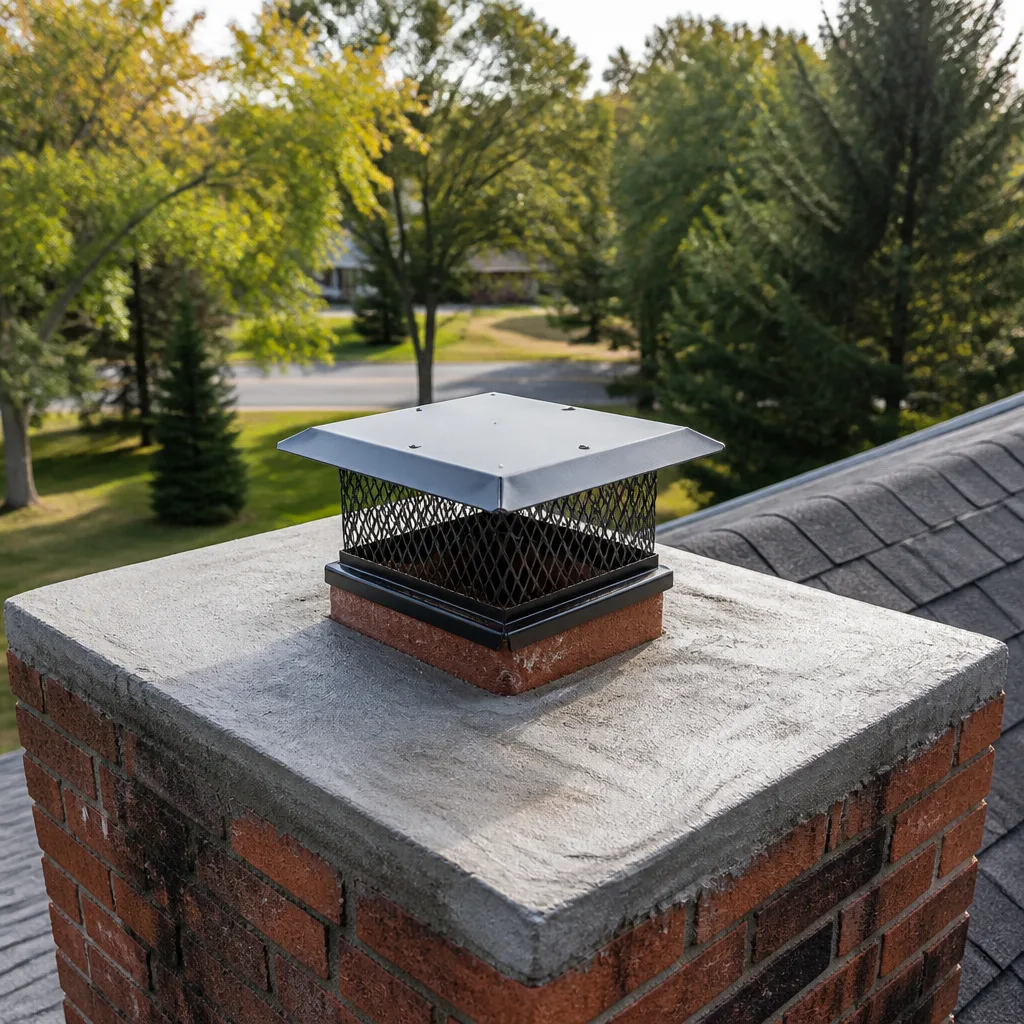
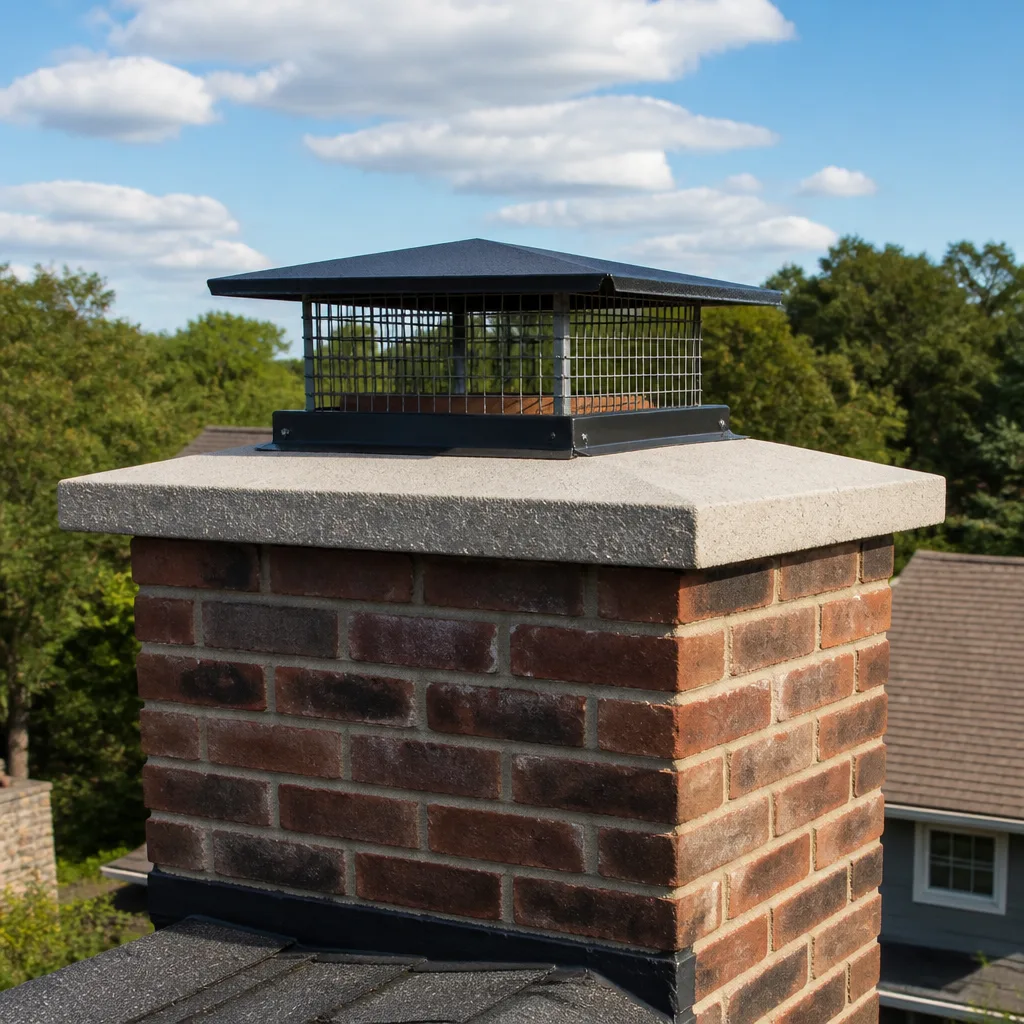
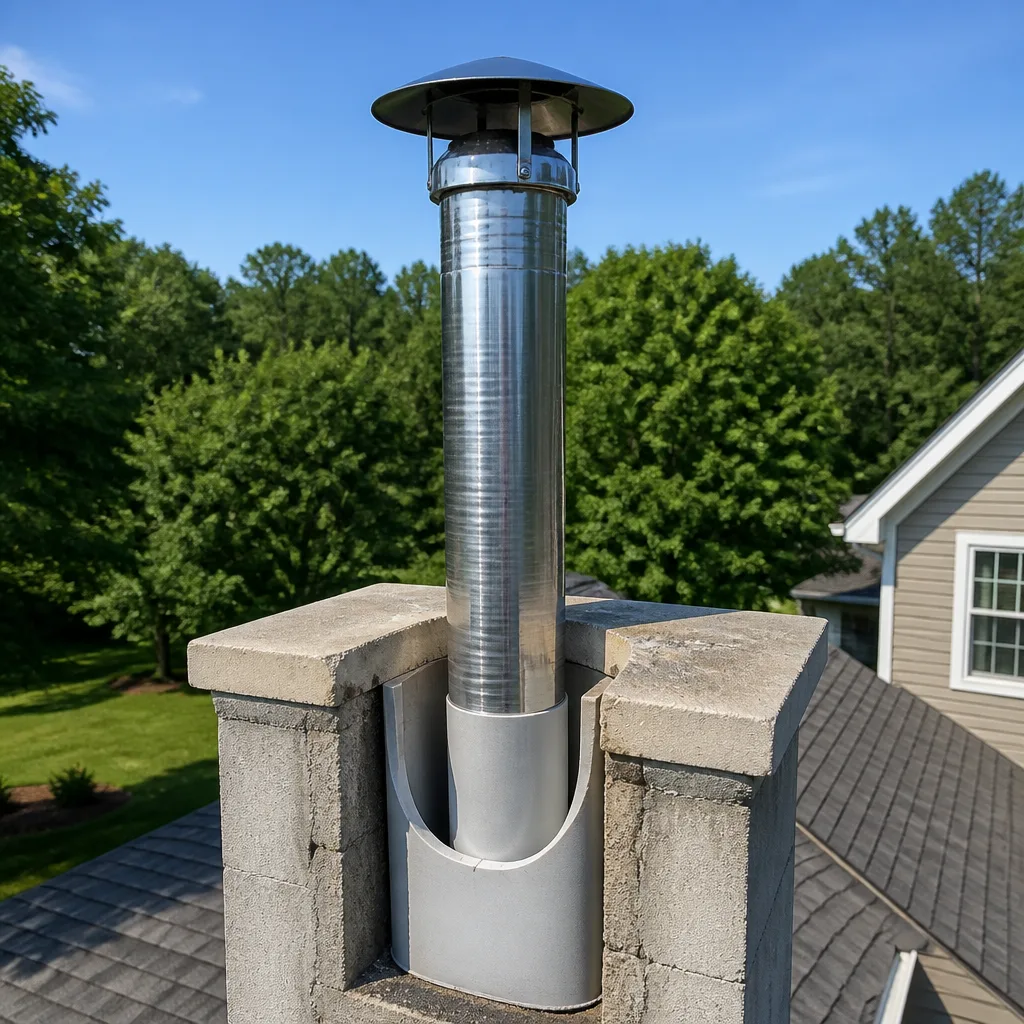
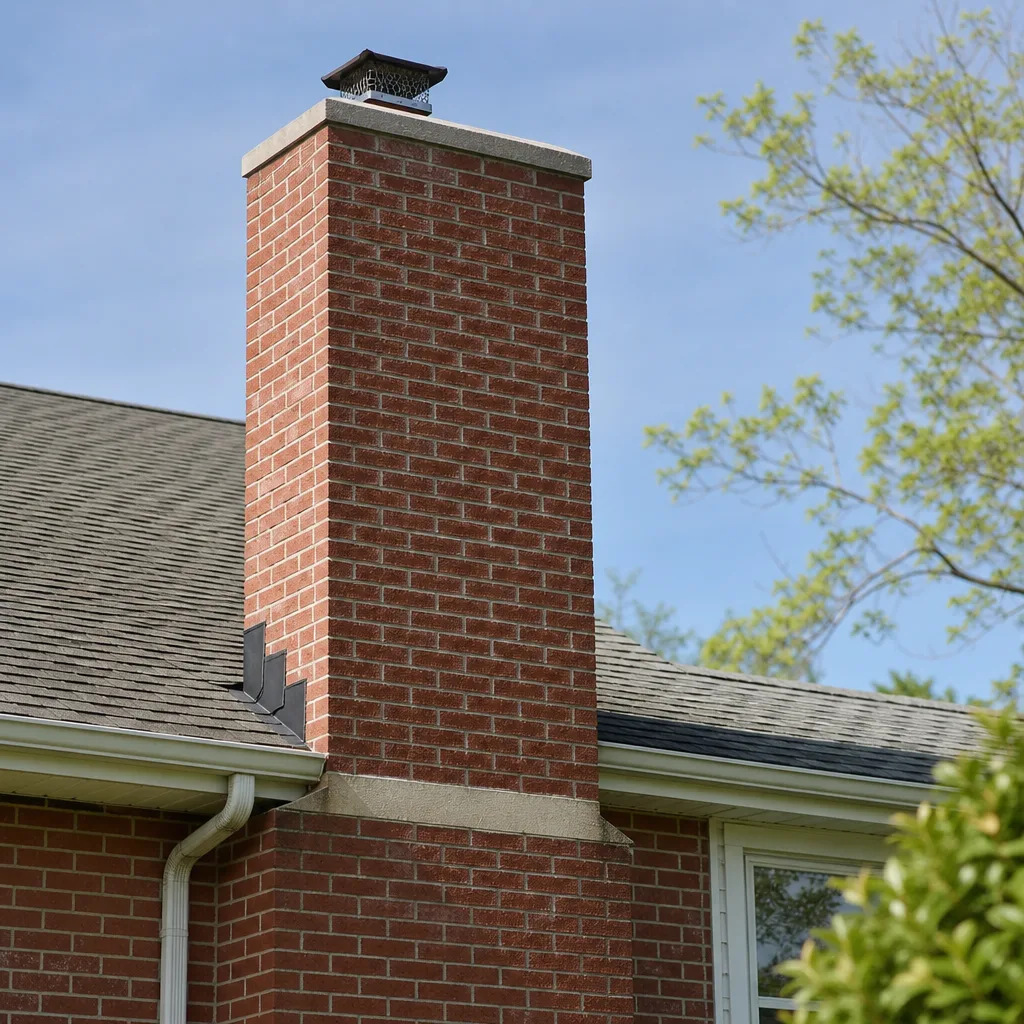
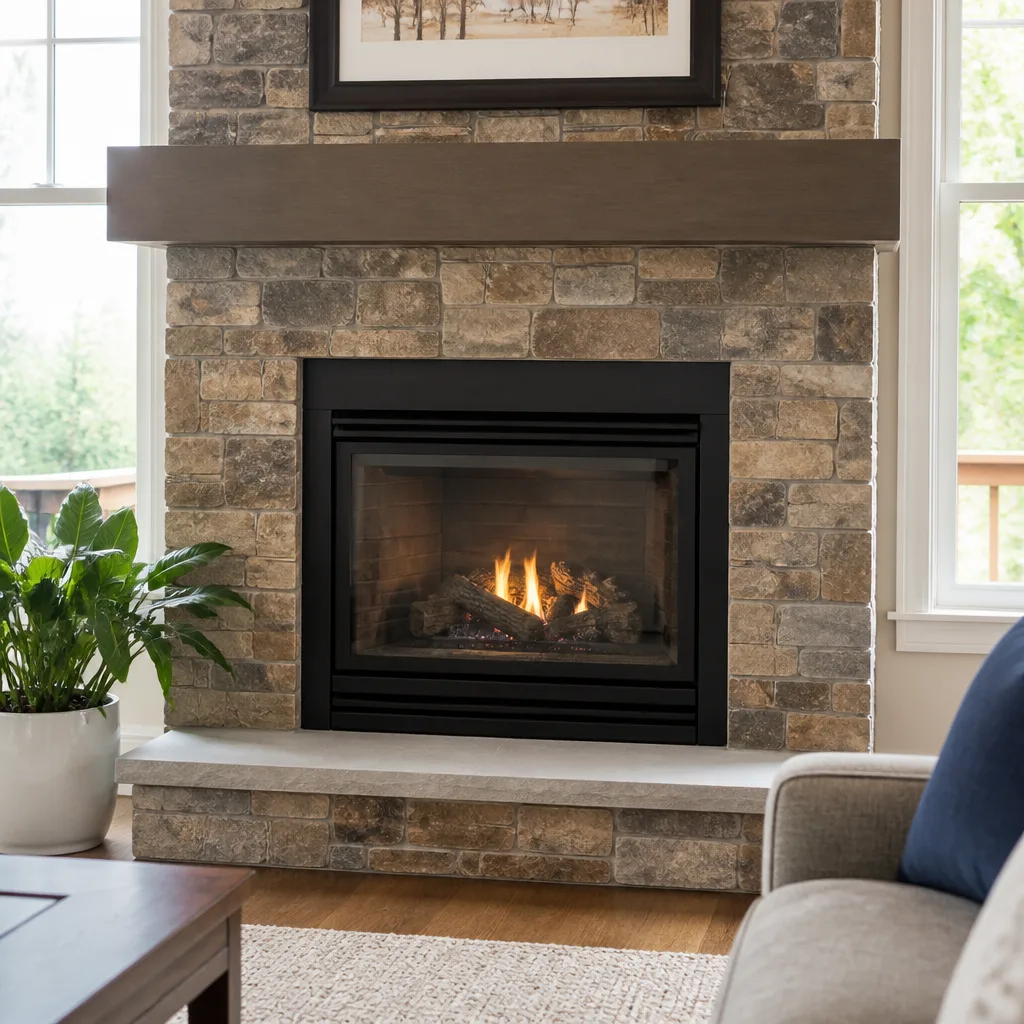
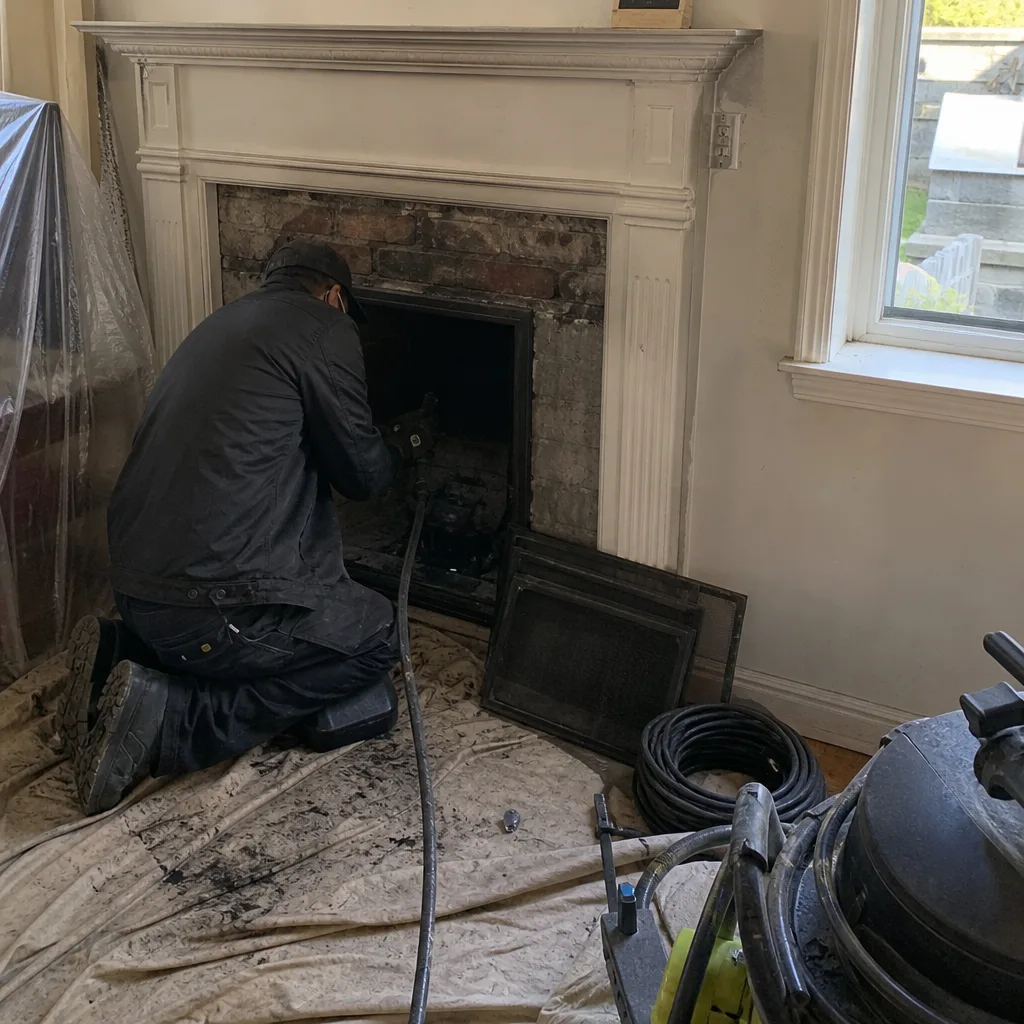 Before
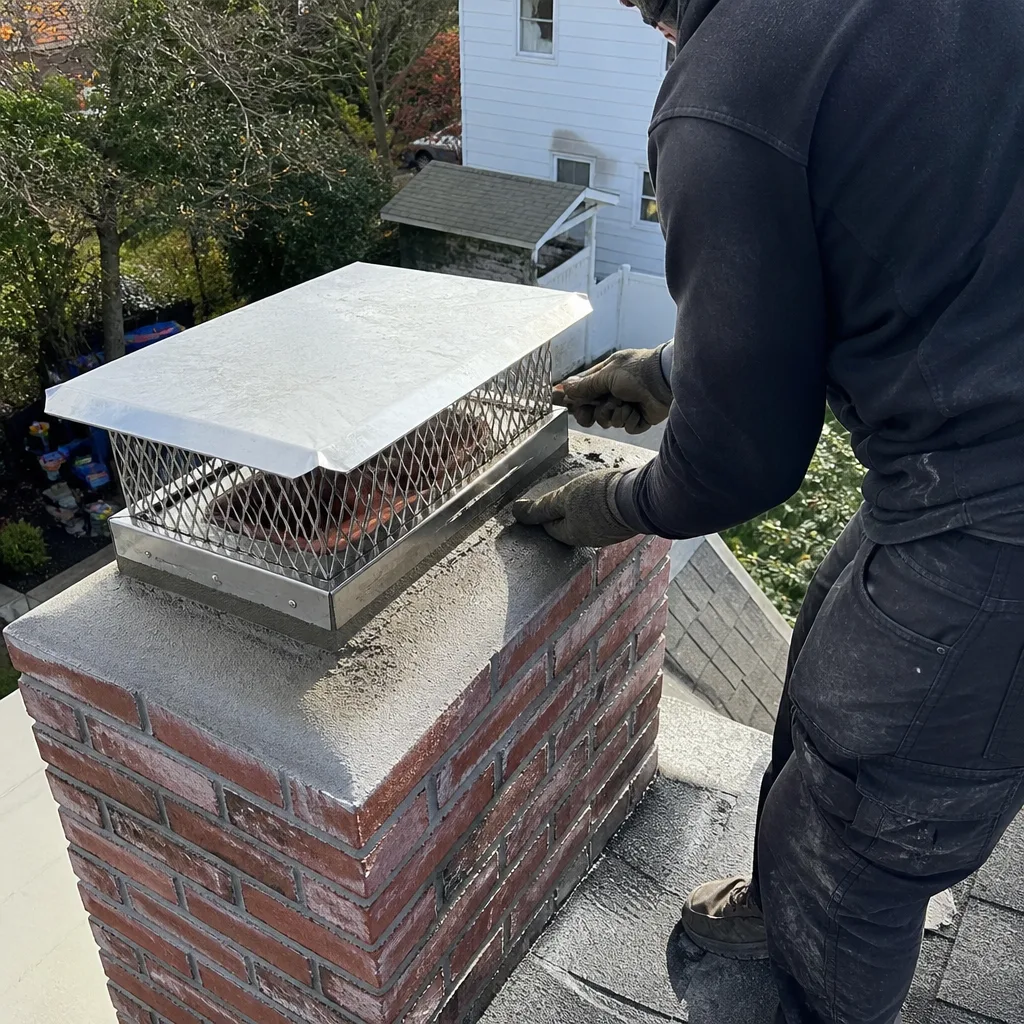 After
After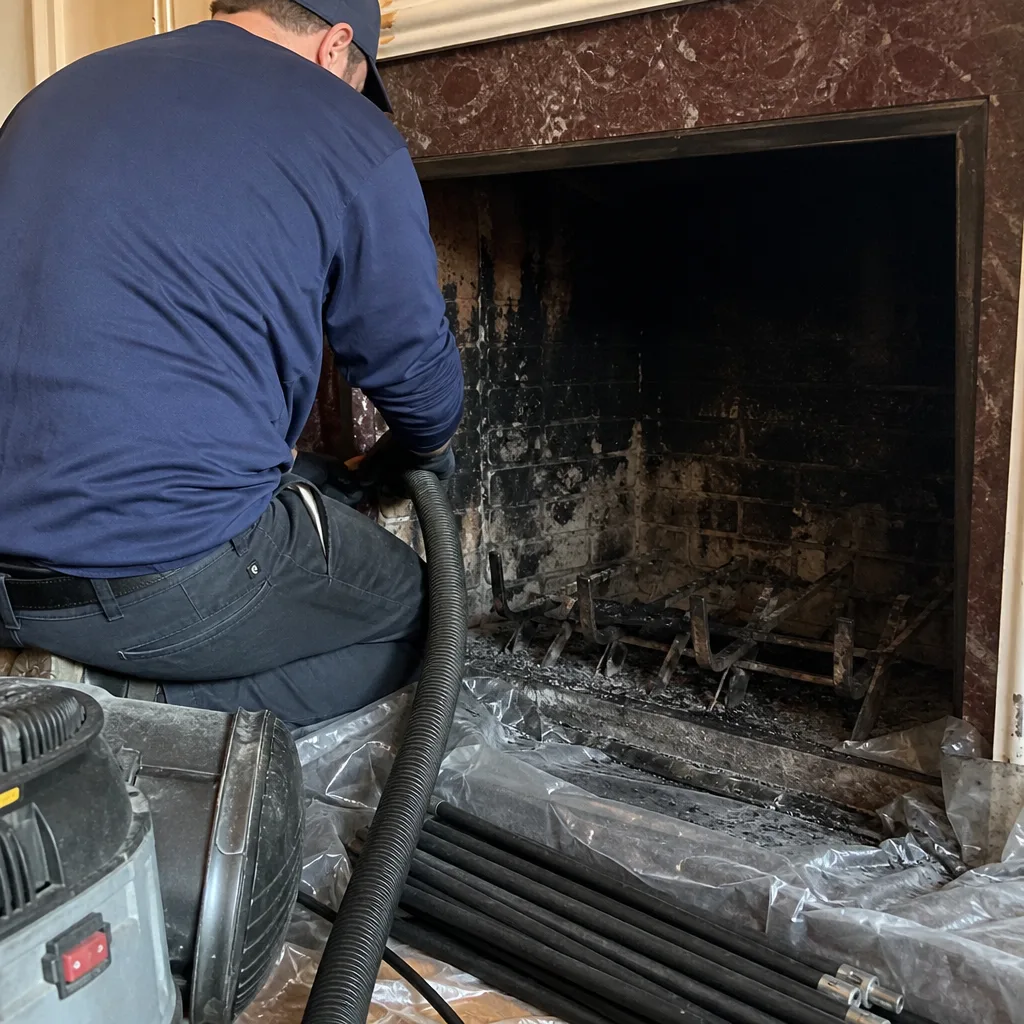 Before
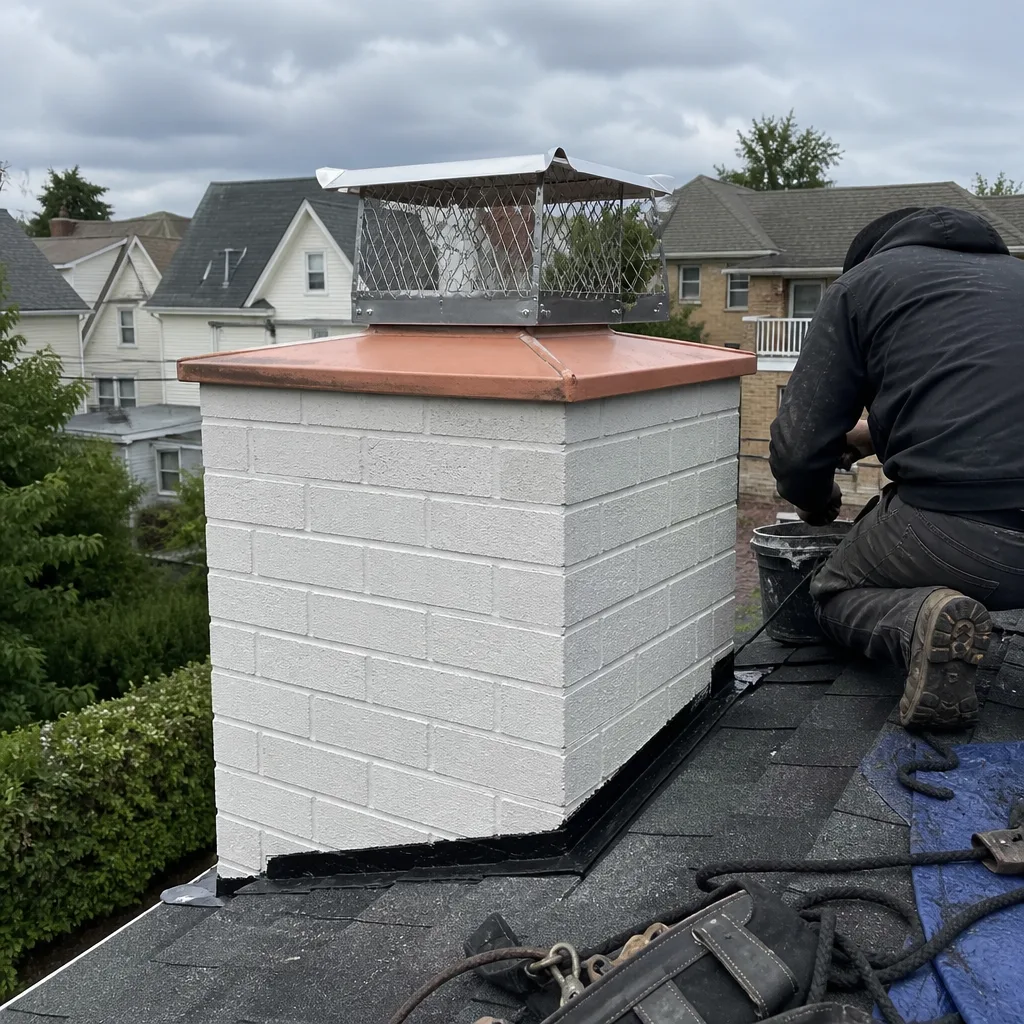 After
After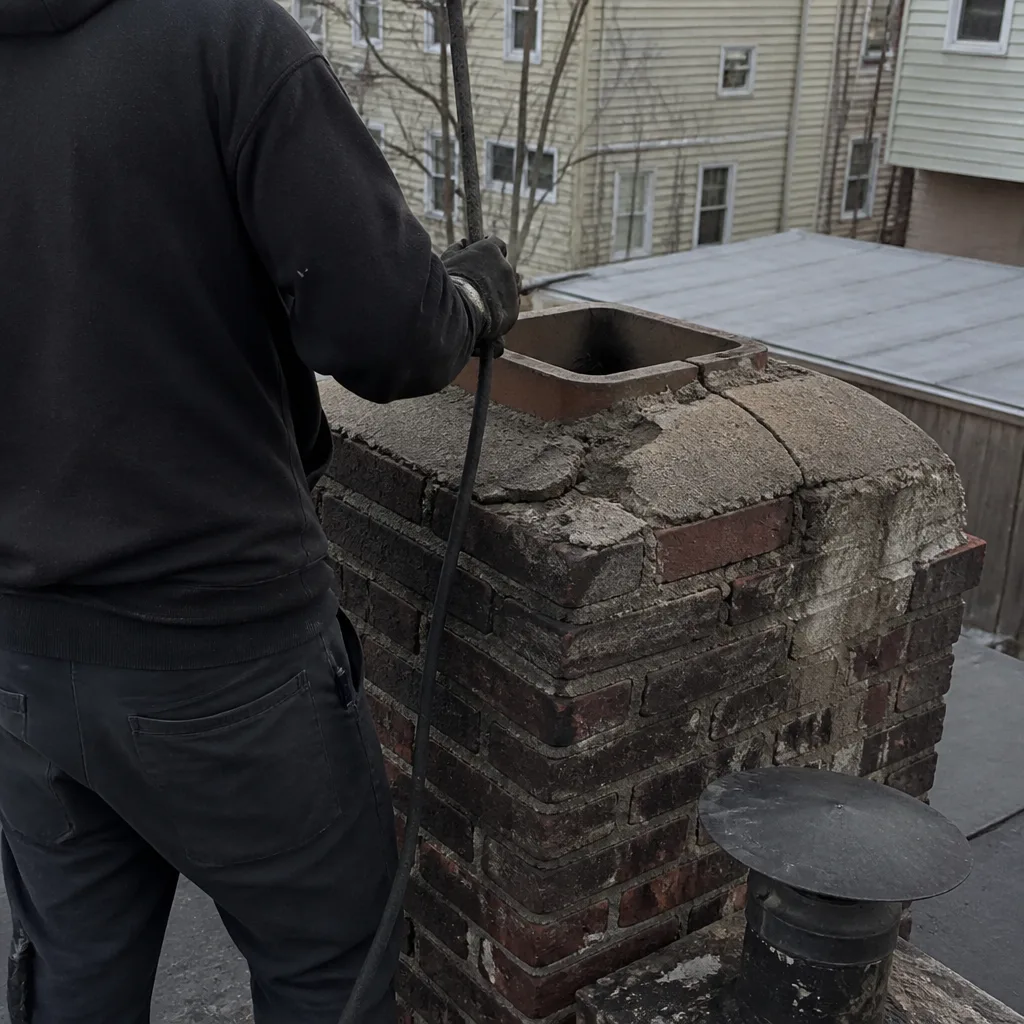 Before
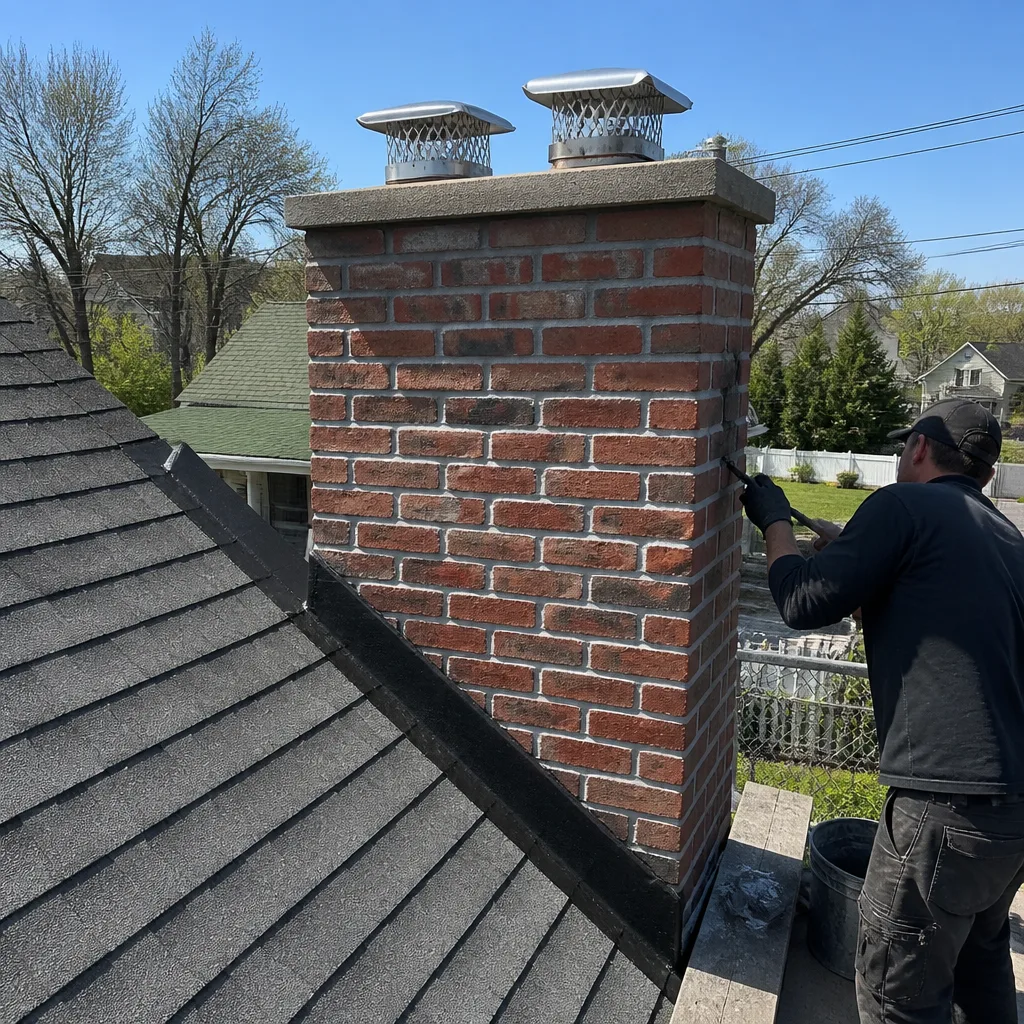 After
AfterThe Complete Guide to Chimney Cleaning in Astoria
Here’s something most Astoria homeowners don’t know: a surprising number of the brick row houses and pre-war apartments in this borough still have abandoned oil-flue liners sitting inside their gas fireplace chimneys. These are leftovers from the oil-to-gas conversion jobs done all through the 1980s and 90s, and most national cleaning crews never think to look for them. This guide covers what that means for your chimney, what a real cleaning actually involves in Astoria’s specific housing stock, and how to know whether the job was done right when the crew pulls away. For year-round chimney maintenance tips, see our seasonal care guide.
Quick Answer
Chimney cleaning in Astoria typically costs $180 to $340 for a standard Level 1 sweep, and you should have it done once a year whether you burn fires regularly or not. The dense row-house construction, salt air off the East River, and the oil-to-gas conversion history of Astoria’s older buildings create specific issues that a generic chimney guide will miss. A proper cleaning here should include a camera inspection, and you should expect to see the footage yourself.
Table of Contents
- What a Chimney Cleaning in Astoria Actually Covers
- The Oil-to-Gas Conversion Legacy in Astoria
- How Row-House Construction Affects Chimney Draft and Access
- Salt Air Off the East River: What It Does to Mortar and Liners
- Non-Standard Flue Dimensions in Pre-1940 Brick
- Level 1 vs. Level 2: What Gets Skipped When a Crew Is Rushing
- How Much Does Chimney Cleaning Cost in Astoria?
- How to Tell If the Cleaning Was Done Right
- Common Mistakes to Avoid
- When to Call a Professional
- Frequently Asked Questions
- The Bottom Line
What a Chimney Cleaning in Astoria Actually Covers
A proper chimney cleaning is not just running a brush up the flue. A full Level 1 cleaning, which is what most Astoria homes need on an annual basis, includes sweeping the full length of the flue, removing creosote deposits from the smoke chamber and firebox, checking the damper for proper operation, and doing a visual inspection of the accessible portions of the chimney interior and exterior. The sweep should also confirm that the flue is clear of obstructions, which in Astoria means checking for things like pigeon nests, fallen brick spalling, or debris that worked its way down from a damaged crown.
What you should expect from the process:
- The sweep lays down drop cloths around the fireplace and runs a HEPA vacuum to control dust. If a crew shows up without a vacuum, that’s a red flag.
- The flue is brushed top-down or bottom-up depending on access. In Astoria, most crews work from the roof, which means the sweep needs to navigate shared parapet walls and tight row-house rooflines.
- The smoke chamber and damper area get scraped and vacuumed. This is where creosote accumulates fastest and where blockages often hide.
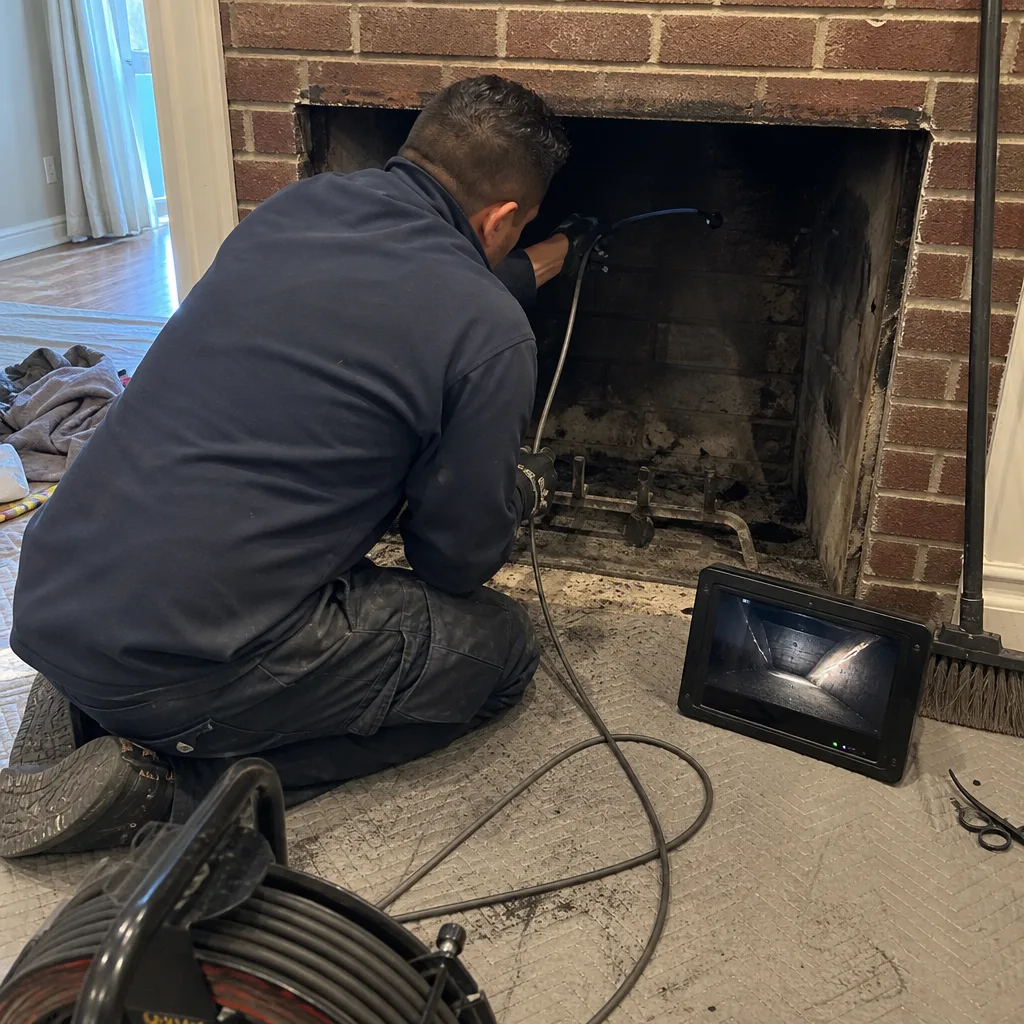
- A camera inspection is run through the flue to verify the walls are clean and to check for cracks, gaps, or liner damage. We’ve said it for years: the camera footage and a plain-English verdict, every time, with no exceptions.
One thing many Astoria homeowners don’t realize is that the type of fuel you burn changes what the cleaning requires. Wood fires produce creosote, which is the tar-like byproduct that builds up on flue walls. Gas fireplaces produce far less creosote but can still develop blockages from debris, and the venting for gas units needs to be checked for proper draft, especially in older homes where the original chimney was sized for oil or wood.
The Oil-to-Gas Conversion Legacy in Astoria
Astoria went through a large wave of heating system conversions in the 1980s and 90s, when thousands of homeowners switched from oil heat to natural gas. What many of those conversion jobs left behind was the original oil flue liner, a clay or metal pipe that ran inside the main chimney. When the new gas furnace or boiler was installed, the contractor often ran a smaller vent pipe up the existing chimney and simply abandoned the old oil liner in place.
Why does this matter during a chimney cleaning? The abandoned liner can obstruct airflow, trap moisture, or hide structural damage that no one has looked at in thirty years. In some cases, the old oil liner corrodes and collapses inward, which narrows the flue passage and creates a draft problem that affects the gas appliance venting. This is a safety issue: an improperly vented gas appliance can push carbon monoxide back into the home.
If your Astoria home was built before 1980 and now has gas heat, there’s a reasonable chance your chimney has an uncapped or unlined oil flue sitting inside it. A sweep who knows the local housing stock will look for this. A national outfit that sends a different tech each visit may never check. That’s not a knock on the tech; it’s a knowledge gap. Wendell Pike has been working on Astoria chimneys since 1999, and he knows what the conversion jobs left behind because he’s been fixing them for nearly three decades.
How Row-House Construction Affects Chimney Draft and Access
Astoria’s attached row houses and semi-detached homes present a specific set of chimney challenges that a sweep from outside the borough won’t anticipate. In a detached single-family home, the chimney rises from the roof as a standalone structure with four exposed sides. In a row house, the chimney is often a shared party-wall structure that runs along the property line, abutting the neighbor’s chimney or sharing a common masonry core.
What this means for the homeowner:
- Access is tighter. Many Astoria chimneys sit near the middle of a row-house roof, which means the sweep has to navigate a narrow roofline, sometimes crossing a shared parapet or working around a neighboring chimney pot. This takes more time and care than a suburban chimney with a wide roof ladder approach.
- Draft behavior is different. Row houses create a wind tunnel effect on narrow Astoria streets. When wind blows down the street, it can push air back down the chimney and into the house, especially if the flue is on the short side. A good sweep will check for backdrafting under real wind conditions, not just on a calm day.
- Shared walls mean shared problems. If your neighbor’s chimney liner is cracked or missing, the masonry between the two flues can let smoke or flue gases migrate from one property to the other. This is not a theoretical problem; we’ve seen it in Astoria more times than we can count.
- Older row-house chimneys often have multiple flues in a single stack, one for each original fireplace on each floor. A cleaning needs to address every flue, not just the one connected to the fireplace you use.
If you’re hiring a sweep in Astoria, ask whether they have experience with attached row houses specifically. The answer will tell you a lot about what you’re paying for. Our step-by-step guide to hiring a chimney contractor in Astoria covers the key questions to ask.
Salt Air Off the East River: What It Does to Mortar and Liners
Astoria sits close enough to the East River that the air carries salt, especially during the fall and winter when onshore winds push river air over the neighborhood. Salt is corrosive, and it accelerates the deterioration of masonry in a way that inland New York homes don’t experience at the same rate.
The most visible effect is on the chimney crown, the concrete or masonry cap at the top of the chimney. Salt air works its way into small cracks, and when the temperature drops below freezing, the trapped moisture expands and spalls the surface. Over a few winters, a hairline crack becomes a crumbling crown, and water starts getting into the flue. That water then attacks the clay liner, and the next thing you know, you’ve got a liner that’s cracked, spalling, or missing pieces.
Salt also accelerates rust on metal components: the damper, the chimney cap, the flashing, and in some cases the liner itself if it’s made of steel. We recommend that Astoria homeowners with river-facing exposures check their chimney cap every fall, because a rusted-through cap lets rain, snow, and nesting birds into the flue.
This is not a scare tactic. It’s what the salt air does. A chimney that gets inspected once a year in Astoria will usually catch crown cracks and cap rust before they turn into interior damage. A chimney left alone for three or four years may need liner work that could have been avoided with a simple repair.
Non-Standard Flue Dimensions in Pre-1940 Brick
A lot of Astoria’s housing stock went up before 1940, and a lot of those chimneys were built with masonry dimensions that don’t match modern standards. The flue may be slightly oval instead of round, slightly offset from center, or built with oversized proportions that were intended for coal or wood fires burning at a different draft rate than a modern gas fireplace.
Why this matters during a cleaning: a standard round chimney brush may not make full contact with the flue walls. The sweep needs to carry multiple brush sizes, including rectangular and oval profiles, and be willing to spend extra time working the brush up and down the flue to get a complete clean. When a crew is rushing between jobs, and they bring one size of brush, they’ll run it through and call it done. We’ve seen the result: creosote streaks left on the walls, corners of the flue untouched, and a homeowner who paid for a cleaning that wasn’t complete.
If you have an older Astoria home, ask the sweep what brush sizes they carry and whether they’ve worked on similar-era flues before. The answer matters more than you might think.
Another issue with older brick: the mortar joints inside the flue can be loose or deteriorated, and aggressive brushing can knock pieces of mortar loose that fall into the smoke chamber or block the damper. A thorough sweep will inspect the flue before and after brushing to make sure nothing dropped.
Level 1 vs. Level 2: What Gets Skipped When a Crew Is Rushing
The Chimney Safety Institute of America (CSIA) defines three levels of chimney inspection. Most annual cleanings in Astoria should be paired with a Level 1 inspection, which is a visual check of the accessible portions of the chimney, flue, and appliance connections. A Level 2 inspection adds camera work and is required when there’s been a change to the system, a property transfer, or an event like a chimney fire, a lightning strike, or an earthquake.
Here’s what a rushed crew skips, in order of frequency:
- The damper check. A stuck or warped damper affects draft and can let cold air pour into the house all winter. It takes two minutes to check, and it’s the first thing skipped when a crew is behind schedule.
- The smoke chamber. This is the area above the firebox where the flue narrows. Creosote builds up here fast, and a brush-only sweep doesn’t clean it. The chamber needs scraping and vacuuming.
- The exterior check. A walk-around look at the crown, the cap, the flashing, and the brickwork. Cracks don’t show up from inside.
- The camera pass. The only way to see what’s happening in the middle of the flue. If the crew doesn’t offer to show you the footage, ask for it. You paid for the cleaning; you should see what the flue looks like.
- The draft test. After the cleaning, the sweep should verify that the flue draws properly. This is done with a smoke match or a draft gauge, and it confirms that the system actually works.
A full Level 1 cleaning in Astoria takes about an hour to 90 minutes for an average row-house chimney. If the crew is done in 30 minutes, something got skipped.
How Much Does Chimney Cleaning Cost in Astoria?
In Astoria, a standard Level 1 chimney cleaning typically runs between $180 and $340. The exact price depends on the height and accessibility of the chimney, the number of flues, the interior condition of the flue, and whether the home is a row house with rooftop access complications or a detached home with easier roof access.
Here’s a breakdown of what drives the price:
- Base cleaning fee: $150 to $250, covering the sweep, vacuum, and basic inspection.
- Camera inspection add-on: $50 to $90 if not included in the base price. We include camera footage in every cleaning because the flue doesn’t care how the fire looks, it cares how it breathes, and the only way to know is to look.
- Roof access complications: $25 to $75 for row houses where the chimney sits mid-roof and requires crossing a shared parapet or working around rooftop obstacles.
- Heavy creosote or glaze removal: $100 to $300 additional if the creosote has reached second or third degree. First-degree creosote is a brush job; third-degree is a glaze, and that requires chemical treatment or mechanical removal with a rotary head.
- Cap replacement or crown repair: $150 to $500, done separately from the cleaning, and quoted upfront before any work begins.
If you’re comparing prices in Astoria, ask what’s included. A $99 advertised cleaning often covers only the brush pass and leaves out the camera, the smoke chamber work, and the exterior check. You’ll end up paying for those separately, or you won’t get them at all. Top Hat Chimney quotes the full price before a single tool comes off the truck, and the number you hear on the phone is the number on the invoice.
How to Tell If the Cleaning Was Done Right
After the crew leaves, here’s how to verify the work without climbing onto the roof:
- Ask to see the camera footage. Every legitimate sweep in Astoria should be able to show you before-and-after images of the flue interior. If they seem reluctant, that’s an answer.
- Check the firebox and smoke chamber with a flashlight. These should be visibly clean, not just brushed around. The corners of the smoke chamber are where creosote hides.
- Look for drop cloth residue. A clean job site means the crew used proper dust containment. Dust all over the room means they did not.
- Open and close the damper. It should move smoothly and seat fully. If the sweep found a problem, they should have told you.
- Ask what they found. A real sweep will give you a plain-English summary of the flue condition, any cracks or gaps, and what needs attention now versus what can wait. If the answer is just “all good,” ask for specifics.
One last thing. A sweep who tells you that you need thousands of dollars of liner or masonry work without showing you the camera evidence is not doing you any favors. The rule at Top Hat Chimney is simple: nothing gets recommended without camera evidence you can see for yourself. We’ll also tell you plainly when work can safely wait. Not every cracked tile needs a new liner tomorrow.
Our Chimney Cleaning Services
Top Hat Chimney performs Chimney Cleaning & Sweep in Astoria for all types of homes, from row-house fireplaces to multi-flue apartment buildings. Every job includes camera inspection, smoke chamber work, and the 90-Day Done Right Promise in writing. If the work is not right, one call brings Wendell back at no additional cost.
We also handle Chimney Repair in Astoria, including crown repair, cap replacement, and flashing work. And for the firebox itself, Fireplace Services in Astoria covers everything from damper replacement to full fireplace rebuilds. Each of these services starts with an honest assessment, and you’ll get a straight answer whether the work needs doing or not.
If you’re dealing with a liner issue, we work with HeatShield and Gelco products, depending on the specific condition of the flue. For older Astoria chimneys with deteriorated mortar joints, HeatShield’s cerfractory material can restore the flue without a full tear-out. For crowns and caps, we use Olympia Chimney products when the existing hardware has failed. The right product depends on the chimney, not on what’s most profitable to the sweep. That’s how it should work, and that’s how Top Hat Chimney home has operated since 1999.
Common Mistakes to Avoid
- Hiring based on the lowest advertised price. A $79 cleaning in Astoria is either a loss leader designed to upsell you on repairs or a brush pass that skips half the job. Ask what’s included.
- Skipping the annual cleaning because you didn’t burn many fires. Once a year, burn or no burn. Chimneys break in the off-season too, and an uncapped flue in Astoria collects rain, leaves, and pigeon nests all year round.
- Ignoring the damper. A bad damper pushes your heating bill up all winter and can create backdraft issues when the wind blows down the street between row houses.
- Assuming your gas fireplace doesn’t need a sweep. Gas fireplaces still vent through the chimney, and blockages occur from debris, bird activity, and collapsed liner pieces. Carbon monoxide doesn’t care what fuel you burn.
- Trusting a quoted price from a national chain without getting it in writing. The number you hear on the phone should match the invoice. If a company can’t do that, call someone else.
- Putting off a crown repair because the chimney still works. Salt air off the East River widens cracks fast. A $300 crown repair this year is a $3,000 liner job in three years if the water keeps coming in.
- Not asking to see the camera footage. You have a right to see what your flue looks like. Any sweep who won’t show you is hiding something or didn’t actually do the inspection.
When to Call a Professional
Call a professional if you see smoke backing into the room when the fireplace is running, if you smell a musty or burning odor coming from the chimney, if you hear animals inside the flue, or if you notice pieces of brick, tile, or mortar falling into the firebox. White staining on the exterior brick near the chimney is a sign of water intrusion that needs attention.
If you haven’t had the chimney cleaned in more than a year, or if you’ve just bought an older Astoria home and don’t know its chimney history, schedule an inspection. Browse our more guides & resources for additional homeowner tips. Top Hat Chimney offers free estimates in Astoria; call (929) 822-6306 and a live person answers, 24 hours a day. It may well be Wendell himself picking up.
Frequently Asked Questions
Chimney cleaning in Astoria typically costs $180 to $340 for a standard Level 1 sweep, with camera inspection adding $50 to $90 if not included. Roof access complications on row houses can add $25 to $75. Call (929) 822-6306 for an exact quote; estimates are free.

Once a year, whether you burn fires regularly or not. Annual sweeps catch creosote buildup, blockages, and salt-air damage before they turn into expensive repairs. In Astoria’s row houses, where chimneys are shared and access is tight, a yearly check is especially important.

Not always. Cracked clay tiles often mean the liner is nearing the end of its life, but small cracks can sometimes be addressed with HeatShield resurfacing rather than a full liner replacement. The only way to know is with camera footage, and any recommendation should show you the evidence. We’ll tell you plainly if the work can wait.

Creosote builds up on the flue walls, and creosote is flammable. A chimney fire can crack the flue, damage the masonry, and spread to the structure. In gas-venting chimneys, a blocked flue can push carbon monoxide back into the home. Skipping one year may be low-risk; skipping several years is not.

Some can, but row-house chimneys raise specific issues: shared party walls, tight roof access, multiple flues, and draft behavior affected by street-level wind. Ask whether the sweep has experience with attached construction. The answer will tell you what to expect.
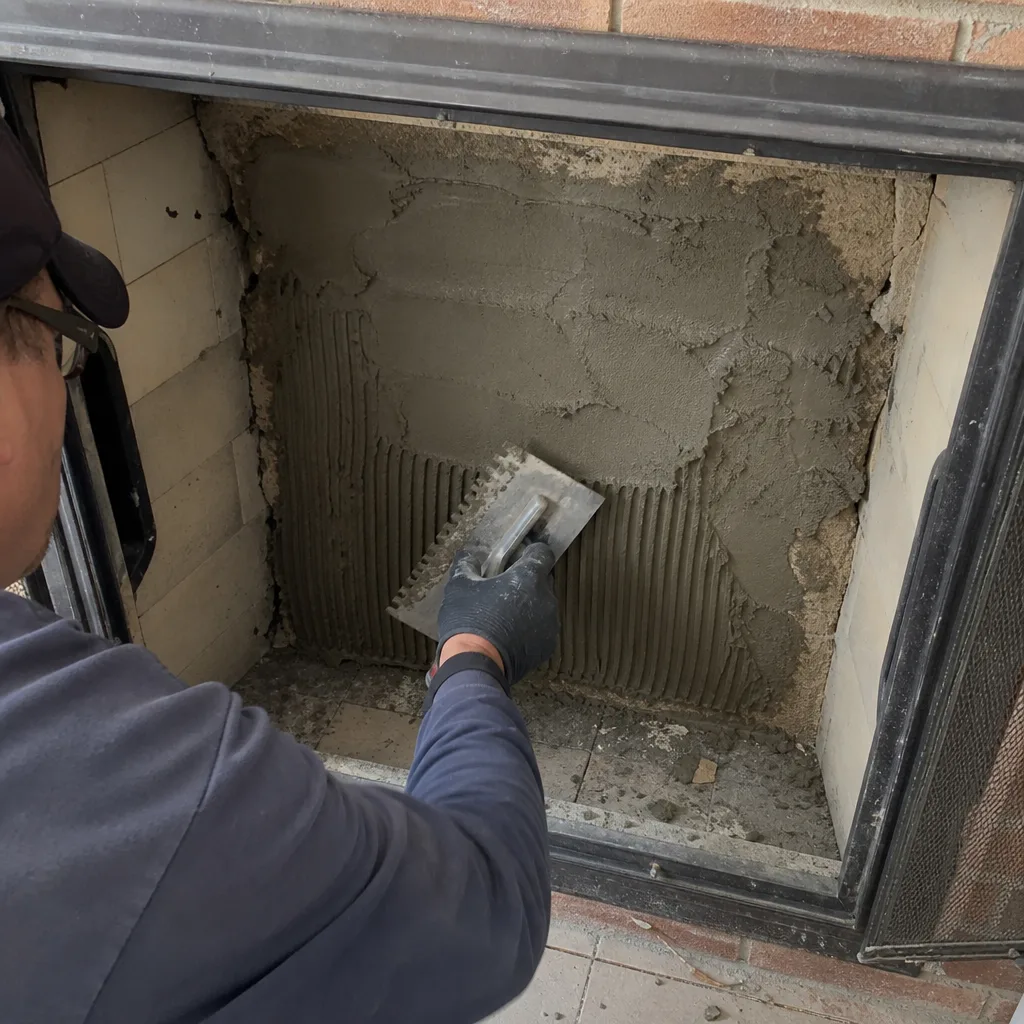
The 90-Day Done Right Promise is Top Hat Chimney’s written guarantee on every job. If the work is not right, one call brings Wendell Pike back at no additional cost. It’s printed, not verbal, and it applies to cleanings and repairs alike. Call (929) 822-6306 for details.
- 1
A real person answersNo phone trees - you reach a local pro.
- 2
You get an upfront price rangeHonest numbers before anyone is dispatched.
- 3
A background-checked tech heads outLicensed & insured, dispatched right away.
- 4
You approve before work beginsNothing starts until you say go.